Today, pistachios are found in chocolate, bakery goods, ice cream, confections, restaurant dishes, and high quality assortments for gift giving. Global production can affect availability and price for wholesale buyers and retailers, as well as source, and risk of supply.
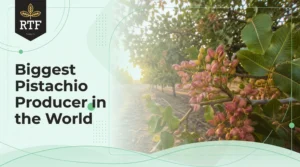
According to the production estimates for the 2025/26 season, the United States is the leading producer of pistachios in the world followed by Türkiye and Iran. It is also the biggest pistachio producer in the world and the three countries account for most commercial supply.
If you are looking into the top pistachio producing countries, this article will tell you who is producing the most, how the country’s rank varies from season to season and what the numbers mean to you as a buyer.
Which Country Is the Biggest Pistachio Producer in the World?
The United States is currently the number one nation. According to production estimates for the 2024/25 marketing year, U.S. production will be approximately 503,000 metric tons, while Türkiye will have approximately 385,000 metric tons and Iran approximately 200,000 metric tons.
California is the hub of U.S. industry. In 2024, the United States manufactured around 488,000 bearing pistachio acres in California, according to USDA Economic Research Service, which stated that the country was the world’s leading producer of the tree nuts for nine straight years at that time.
This makes the United States the larg est producer of pistachios in the current comparison. But, there are no set standards for the annual production gaps with pistachios.
Top Pistachio-Producing Countries
The top pistachio producing countries are currently the United States, Türkiye, and Iran. Together, they account for most commercial pistachio production worldwide.
| Rank | Country | Approximate 2024/25 Production | Market Position |
| 1 | United States | 503,000 metric tons | Largest pistachio producer |
| 2 | Türkiye | 385,000 metric tons | Major global producer |
| 3 | Iran | 200,000 metric tons | Historic producer and exporter |
These figures should be viewed as marketing-year estimates rather than permanent rankings. Weather, crop cycles, orchard maturity, and water availability can significantly change production from one season to another.
Why the United States Became the Largest Pistachio Producer
The rise of American pistachios is closely connected to the expansion and commercialization of California agriculture.
Expanding California Acreage
California pistachio acreage has grown dramatically. USDA data show that bearing acreage reached about 488,000 acres in 2024, nearly five times the level recorded two decades earlier. Because pistachio trees take years to mature, this increase represents long-term production capacity rather than a short-lived rise in output.
Large-Scale Commercial Production
California benefits from mechanical harvesting, centralized processing, professional grading, storage infrastructure, and established export channels. For wholesale buyers, this scale can support large orders, consistent specifications, and predictable commercial supply.
Established and Newer Cultivars
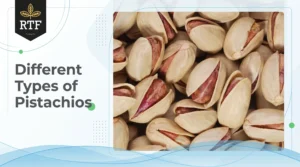
Kerman has historically been California’s best-known cultivar, while Golden Hills and Lost Hills have become increasingly important. These cultivars differ in characteristics such as maturity timing, nut size, blanks, and natural shell splitting. Such differences matter commercially because appearance and shell opening directly influence in-shell retail products.
Iran
Historically, Iran was one of the key countries in the world in terms of production and export of pistachios and is still one of the world’s major pistachio producers.
Iranian pistachios are a highly diversified variety as well. The size, shape and appearance of Akbari, Ahmad Aghaei, Fandoghi and Kalleh Ghouchi are different; and they have different market positioning. This selection offers a choice of length as well as rounder varieties for large volume retail sales.
The estimated 2024/25 production in Iran is approximately 200,000 metric tons. Production and availability of water may be affected by water scarcity, drought, climate variability, and international trade conditions.
Türkiye
Türkiye has become the biggest and more significant producer of pistachios. Another important player in the global pistachio market is Türkiye.
Estimated production for the 2024/25 marketing year was approximately 385,000 metric tons of which, a particularly good harvest was expected compared to the previous season.
Turkish pistachios are linked to the food products like baklava, confectionery, dessert, and specialty retail and to the south-eastern growing areas. Some of the known Turkish varieties are Siirt and Uzun. A good harvest in Turkey can significantly boost the availability of pistachio in the regional and international market.
Why Pistachio Production Changes So Much
Being the largest pistachio producing country does not mean producing exactly the same amount every year. Pistachios can show substantial annual swings.
Alternate Bearing
Pistachio trees naturally tend to alternate between heavier “on” crops and lighter “off” crops. This means production can rise or fall significantly even when the total orchard area changes very little.
Weather and Chill Requirements
Winter chill, spring temperatures, frost, heat, rainfall, and pollination conditions can all affect nut development and final yields.
Water Availability
Pistachios are well suited to relatively dry climates, but commercial orchards still depend on effective water management. Long-term drought can limit productivity and future expansion.
Orchard Maturity
New pistachio acreage does not immediately produce at full capacity. As younger orchards mature, national output can increase even without large additions of new acreage.
These factors are why a single production year should never be treated as a permanent global ranking.
Producer Is Not the Same as Exporter
The world’s largest pistachio producer is not automatically the world’s largest pistachio exporter. Production is the number of pistachios a country’s harvest. Exports are the amount of the crop that has been exported to overseas markets. A producing country can eat its own harvest, process it locally, have inventory and/or export some of what it produces.
Buyers are interested in the difference. The production figures give an idea of where the goods are coming from, whereas export figures give a more accurate picture of the amount of product that may actually be exported.
What Production Rankings Mean for Buyers
Imagine a supermarket buyer comparing several suppliers. Knowing that one supplier sources from the largest pistachio producer provides useful market context, but it does not prove that the shipment is the best choice.
Buyers should also compare:
- cultivar and origin;
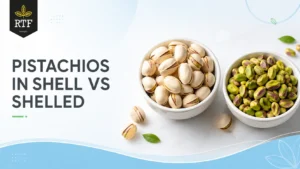
- in-shell pistachios versus kernels;
- nut size and count;
- natural-open percentage;
- crop year and freshness;
- blank and defect rates;
- roasting and salting specifications;
- food-safety documentation;
- packaging formats;
- minimum order quantity;
- freight and lead time;
- delivered cost.
Global rankings tell you where large volumes come from. Product specifications tell you whether a particular shipment is right for your business.
Does the Largest Producer Offer the Best Pistachios?
Not necessarily. “Largest” is not universal “Best.” Consider using an American pistachio in a large supermarket program, and an Iranian cultivar in a premium gift assortment. For some confectionery or regional use, Turkish pistachios might be preferred.
The more important question is not just about which country is the greatest producer of pistachios, but which origin, cultivar, grade and specification is best suited to your customer.
How to Choose a Pistachio Origin for Wholesale Purchasing
Start with the product you need rather than choosing a country solely because of its production ranking.
- Decide whether you need in-shell pistachios or kernels.
- Define acceptable size, grade, moisture, and defect levels.
- Determine whether cultivar or origin matters to your branding.
- Compare current crop availability rather than historical production alone.
- Request representative samples before ordering large volumes.
- Verify food-safety, traceability, and import documentation.
- Compare delivered cost, not only price per kilogram.
A slightly higher purchase price can still provide better value when a shipment offers fewer defects, stronger shelf presentation, and more consistent quality.
Conclusion
The United States is currently the biggest pistachio producer in the world and the world’s largest pistachio producer by recent production estimates. Türkiye and Iran remain the other two major players among the top pistachio producing countries.
For wholesalers, retailers, and supermarkets, production rankings provide useful market context, but they should not determine a purchase by themselves. Compare cultivar, grade, freshness, shell opening, food-safety documentation, crop availability, and delivered cost before choosing a supplier.
For bulk sourcing, use global production data to identify major origins, then make the final decision based on actual product specifications and samples.
FAQ
Who is the biggest pistachio producer in the world?
The United States is currently the biggest pistachio producer in the world, with California accounting for most U.S. commercial production.
Which country is the largest pistachio producer in the world?
The United States currently holds the position of largest pistachio producer in the world, followed by Türkiye and Iran in the 2024/25 comparison.
What are the top pistachio producing countries?
The top pistachio producing countries are the United States, Türkiye, and Iran. Together, they dominate global commercial pistachio production.
Is Iran the largest producer of pistachios?
No. Iran remains an important historic producer, but the United States is currently the largest producer of pistachios.
Why does pistachio production change every year?
Alternate bearing, weather, water availability, orchard maturity, and growing conditions can all cause significant year-to-year changes.
Is the largest pistachio producer also the largest exporter?
Not necessarily. Production measures harvest volume, while exports measure the amount shipped to international markets.