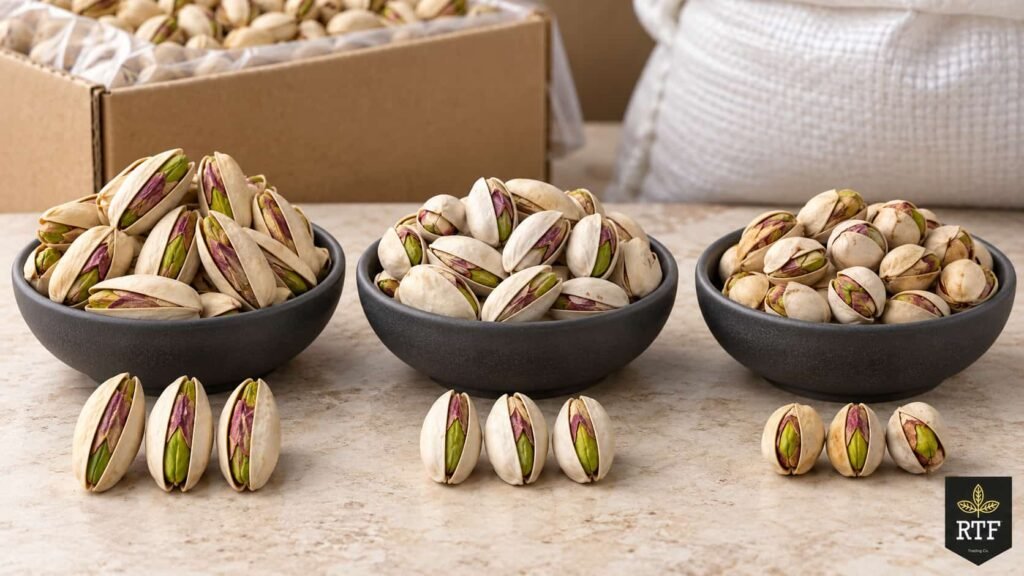
Iranian pistachios are available in several varieties but Akbari, Ahmad Aghaei and Fandoghi are among the most recognized options in international trade. Each variety has its own shape, size characteristics and commercial advantages.
For importers and wholesale buyers, choosing between these pistachios is not simply a matter of appearance. The right choice depends on the destination market, customer preferences, intended application, quality specifications and purchasing budget.
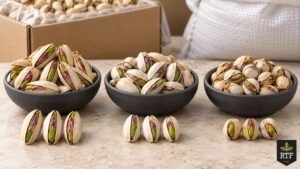
Akbari is generally preferred for its long, premium appearance. Ahmad Aghaei offers an attractive elongated shape with versatile commercial applications. Fandoghi is a round pistachio variety commonly considered for bulk trading and price-sensitive markets.
Choosing between Akbari, Ahmad Aghaei and Fandoghi pistachios requires more than comparing their size and appearance. Each Iranian pistachio variety offers different advantages depending on product quality, pricing and the requirements of the destination market. For example, a carefully graded Fandoghi shipment may provide better value than a lower-quality Akbari lot. For international buyers exploring How to Import Iranian Pistachios to Russia understanding these differences is an important step toward selecting the right product. This guide compares the three varieties and highlights the key factors to consider before placing a bulk order.
Akbari vs Ahmad Aghaei vs Fandoghi: Quick Comparison
The following table highlights the main differences between these Iranian pistachio varieties.
| Feature | Akbari | Ahmad Aghaei | Fandoghi |
|---|---|---|---|
| Shape | Long and elongated | Long and relatively slender | Round |
| Market positioning | Premium | Premium to mid-premium | Commercial and value-oriented |
| Typical appearance | Large elongated shell | Attractive elongated shell | Compact round shell |
| Common size ranges* | 18/20 to 24/26 | 22/24 to 28/30 | 26/28 to 32/34 |
| Main advantage | Premium presentation | Appearance and versatility | Bulk trading flexibility |
| Typical buyers | Premium distributors and wholesalers | Importers and distributors | Bulk buyers and processors |
| Price positioning | Often higher | Depends on grade and size | Often more economical |
| Best purchasing criterion | Size and appearance uniformity | Consistent grade and shell quality | Cost-to-quality balance |
Size ranges are indicative trade examples, not guaranteed availability or fixed limits for each variety. Actual sizes depend on harvest conditions and sorting.
For buyers seeking a premium in-shell product, Akbari and Ahmad Aghaei are often the first varieties worth evaluating. Fandoghi can be an attractive alternative when competitive pricing and volume are more important than an elongated appearance.
The final purchasing decision should always be based on a representative sample and an agreed product specification.
What Is Akbari Pistachio?
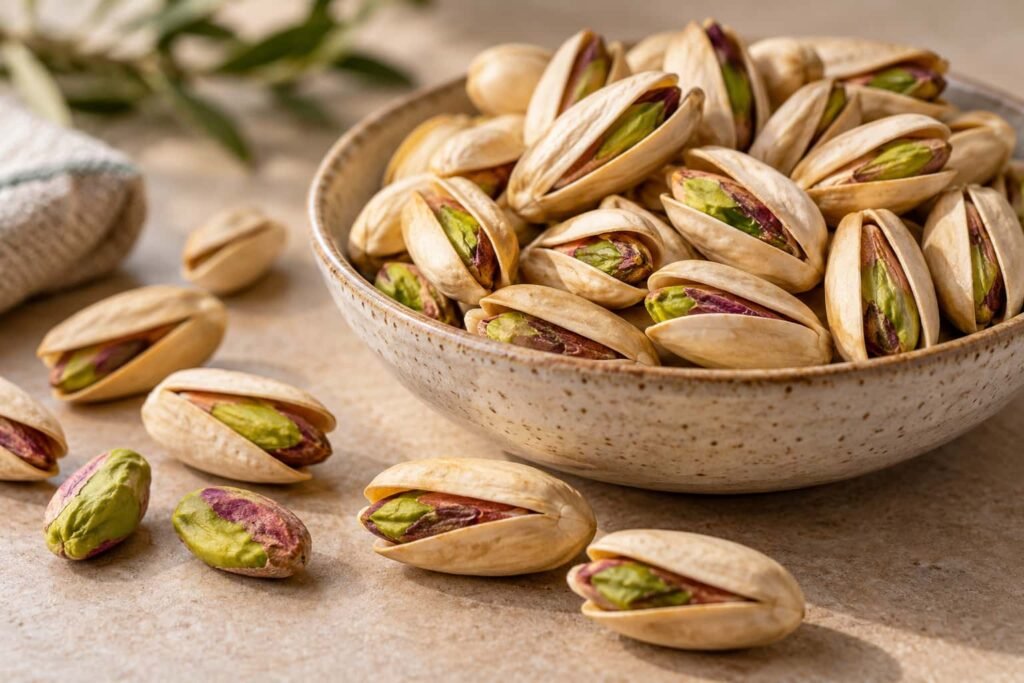
Akbari is a well-known Iranian long pistachio variety recognized for its elongated shape and premium visual presentation. Its distinctive appearance makes it particularly attractive for businesses selling pistachios as a premium snack or distributing them in markets where large, long pistachios are preferred.
Appearance and Size Characteristics
Akbari pistachios typically have a long shell and an elongated kernel. Larger grades can create a particularly impressive presentation when the shipment is uniform in size and shell color. In international trade, Akbari is commonly offered in size ranges such as 18/20, 20/22, 22/24 and 24/26. Availability varies by crop and supplier.
The 18/20 size is especially notable because fewer pistachios per ounce generally indicate larger nuts. However, buyers should not judge Akbari quality by size alone. The percentage of naturally opened shells, closed shells, damaged nuts and color variation can significantly affect the overall grade.
Why Do Buyers Choose Akbari?
Akbari is often selected for premium presentation and its recognizable long shape. It may be suitable for:
- Premium packaged pistachio products
- High-end wholesale distribution
- Specialty nut retailers
- Gift and hospitality product lines
- Markets that prefer large, elongated pistachios
Akbari can command a higher price than smaller commercial varieties when its size and quality justify that positioning.
For buyers targeting premium consumers, consistent appearance is particularly important. A shipment with mixed sizes or uneven shell color may lose part of its premium appeal.
What Is Ahmad Aghaei Pistachio?
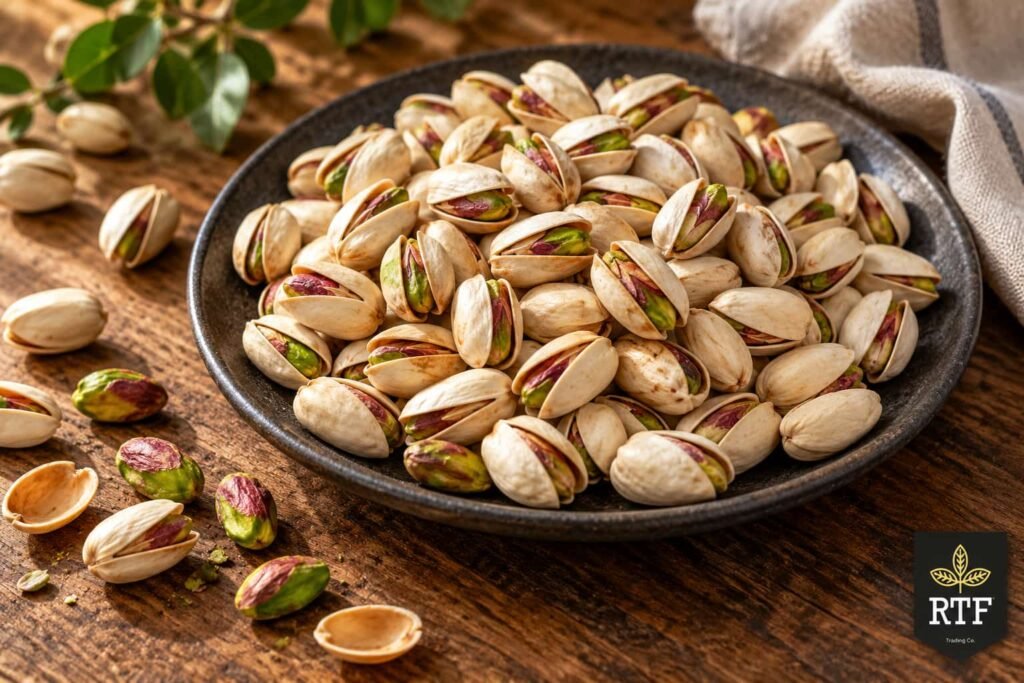
Ahmad Aghaei is another important Iranian long pistachio variety. It is widely recognized for its attractive shell shape and commercial versatility. Compared with Akbari, Ahmad Aghaei generally has a relatively slender appearance. It can provide a premium-looking product without necessarily requiring the largest size grades.
Appearance and Size Characteristics
Ahmad Aghaei pistachios have an elongated shell with a shape that differs from the broader and larger appearance often associated with premium Akbari grades. Commonly traded size ranges include 22/24, 24/26, 26/28 and 28/30 although actual availability must be confirmed for each harvest.
Shell color and visual uniformity are important commercial characteristics. Buyers purchasing Ahmad Aghaei for retail packaging should pay particular attention to sorting consistency.
Why Do Buyers Choose Ahmad Aghaei?
Ahmad Aghaei can offer a useful balance between premium appearance, available size grades and commercial flexibility.
It is commonly considered for:
- Wholesale pistachio distribution
- Branded retail packaging
- Snack products
- Importers seeking long pistachio varieties
- Buyers comparing premium appearance against purchasing cost
Ahmad Aghaei pistachios are not always less expensive than Akbari. Pricing depends on factors such as nut size, grading consistency, shell appearance and overall product quality. A premium-grade Ahmad Aghaei shipment can sometimes cost more than a lower-grade Akbari lot. For businesses looking to Buy Iranian Pistachios in Bulk comparing products with similar grades and technical specifications is essential to making an informed purchasing decision and securing the best value.
What Is Fandoghi Pistachio?
Fandoghi is an Iranian round pistachio variety. Its compact shape distinguishes it from the long Akbari and Ahmad Aghaei varieties. Fandoghi is commonly considered by buyers seeking commercially practical pistachios for wholesale distribution and bulk purchasing.
Appearance and Size Characteristics
Fandoghi pistachios have a rounded shell and are generally smaller than the largest grades of Akbari. Common trade sizes include 26/28, 28/30, 30/32 and 32/34.
The smaller average size does not necessarily indicate poor quality. A uniform Fandoghi shipment with an appropriate opening percentage and low defect levels may meet demanding commercial requirements.
Why Do Buyers Choose Fandoghi?
Fandoghi is often evaluated when price competitiveness, supply planning and bulk distribution are important.
Typical applications include:
- Wholesale nut distribution
- Commercial snack packaging
- Roasted and salted pistachio products
- Bulk import programs
- Markets where smaller round pistachios are acceptable
Fandoghi may offer a cost advantage over premium large-size long varieties. Nevertheless, its actual price depends on the harvest, grade, size and purchasing conditions.
Buyers should compare the landed cost and quality specifications rather than choosing a variety based only on its quoted price per kilogram.
Understanding Pistachio Sizes: What Does 18/20 or 28/30 Mean?
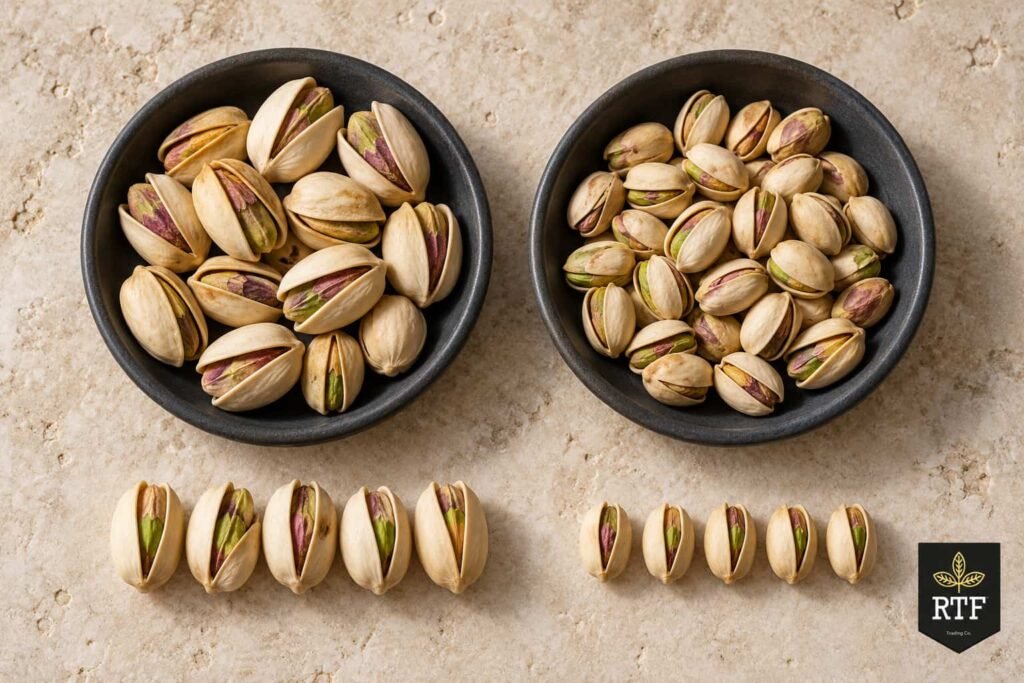
Size is one of the most important factors in Iranian pistachio trading. Pistachios are commonly classified by the approximate number of nuts in one ounce, equivalent to about 28.35 grams.
A lower ounce count indicates a larger average pistachio size.
For example, 18/20 pistachios are generally larger than 28/30 pistachios.
| Size Grade | Approximate Nuts per Ounce | General Positioning |
|---|---|---|
| 18/20 | 18–20 | Very large |
| 20/22 | 20–22 | Large |
| 22/24 | 22–24 | Large |
| 24/26 | 24–26 | Medium to large |
| 26/28 | 26–28 | Medium |
| 28/30 | 28–30 | Medium to small |
| 30/32 | 30–32 | Small |
| 32/34 | 32–34 | Small |
These positioning labels are descriptive rather than universal official grades.
Is a Larger Pistachio Always Better?
Not necessarily.
Larger pistachios are often preferred in premium retail applications because of their visual impact. However, smaller pistachios may offer better purchasing economics for high-volume distribution.
Buyers should consider the relationship between size, appearance, opening percentage and price. A larger nut with inconsistent shell color and a high defect rate is not automatically a better purchase than a smaller, carefully sorted product.
Quality Differences: What Matters Beyond Pistachio Variety?
Two shipments of the same pistachio variety can differ considerably in commercial quality. Professional importers should evaluate the complete specification rather than relying only on the variety name.
Naturally Opened vs Mechanically Opened Pistachios
Naturally opened pistachios develop an opening in their shells during growth and maturation. Mechanically opened pistachios undergo a processing operation to open shells that were originally closed or insufficiently open. These products should be identified separately in commercial specifications.
Buyers seeking naturally opened pistachios should explicitly request that classification and confirm it through sampling or inspection.
Closed Shell Percentage
The percentage of closed shells affects how a shipment is evaluated for its intended use. For naturally opened in-shell pistachios, a lower closed-shell percentage is generally desirable.
A commercial specification may permit a limited percentage of closed shells. For example, a buyer and supplier might agree on a maximum of 5%.
However, 5% is not a universal legal allowance for all pistachio grades or export destinations. Permitted tolerances depend on the applicable grading standard and contractual agreement.
Shell Color and Uniformity
Uniform shell appearance can increase the commercial attractiveness of in-shell pistachios.
Buyers should examine:
- Shell color consistency
- Visible stains and discoloration
- Size uniformity
- Mechanical damage
- Residual hull material
- Abnormally shaped nuts
These characteristics become especially important when pistachios are sold in transparent retail packaging.
Internal Kernel Quality
The kernel inside the shell must also be evaluated. Important considerations include maturity, color, moisture, insect damage, mold and other internal defects.
An attractive shell and uniform appearance do not always indicate high-quality pistachio kernels. Internal characteristics such as kernel color, maturity, moisture content and potential defects are equally important when evaluating pistachios for international trade. Understanding the Different Types of Pistachios and their specific quality characteristics helps importers select products that meet their purchasing requirements. For bulk export shipments, representative sampling and appropriate laboratory testing are essential to verify product quality and food safety before shipment.
Which Pistachio Variety Is More Expensive?
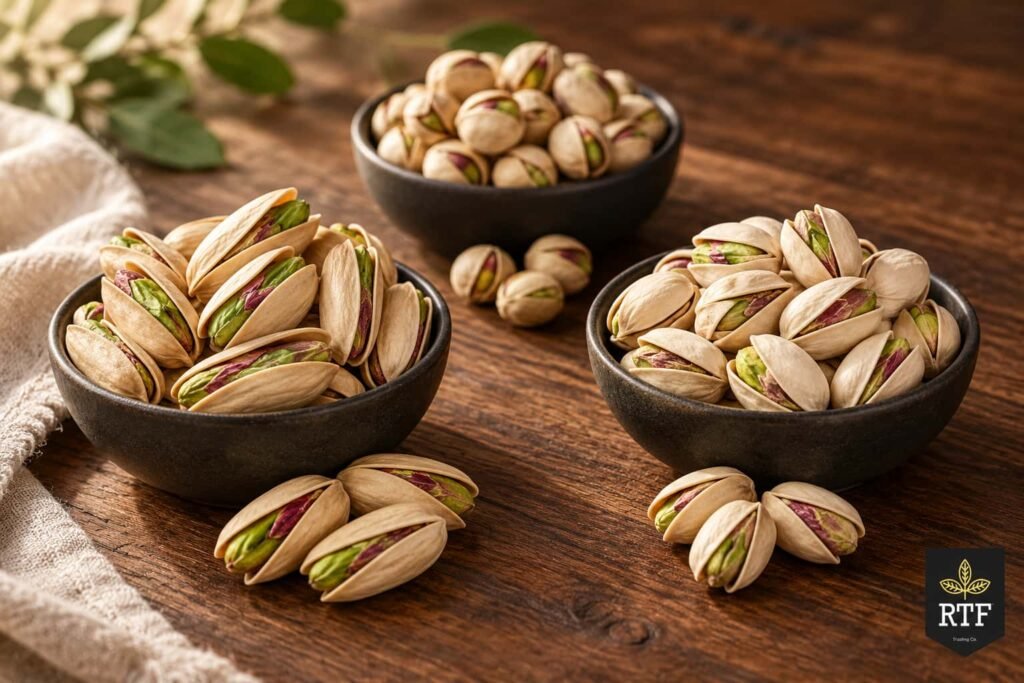
Akbari is often positioned as a premium variety, particularly in larger and more uniform grades. Ahmad Aghaei may also achieve premium pricing depending on its quality and size. Fandoghi is frequently considered a more economical choice for bulk purchasing. However, there is no fixed price relationship between these varieties.
The final price is influenced by:
- Crop year and harvest conditions
- Variety and size
- Naturally opened percentage
- Closed-shell and defect tolerances
- Sorting and grading quality
- Packaging requirements
- Order volume
- Market demand
- Delivery terms and destination
For example, comparing 18/20 Akbari with 30/32 Fandoghi does not provide a like-for-like price comparison. A meaningful quotation should specify the product grade, packaging, quantity and applicable Incoterm. Buyers should also consider freight, insurance, customs duties and other destination costs when comparing offers.
Which Variety Is Best for Different Buyers?
The best variety depends on how the pistachios will be sold or processed.
| Buyer Type | Variety to Evaluate | Main Consideration |
|---|---|---|
| Premium nut distributor | Akbari | Large size and visual presentation |
| Branded snack company | Ahmad Aghaei or Akbari | Consistent appearance and quality |
| Bulk wholesaler | Fandoghi or Ahmad Aghaei | Price-to-quality balance |
| Specialty retailer | Akbari or Ahmad Aghaei | Attractive shell and uniformity |
| Price-sensitive distributor | Fandoghi | Commercial value |
| Food processor | Any suitable variety or kernel grade | Processing requirements and usable yield |
These are purchasing recommendations rather than fixed rules for every country or customer.
Choosing Pistachios for Premium Retail Markets
For premium retail products, large and visually consistent pistachios can support attractive packaging and product positioning. Akbari is often a strong candidate. Ahmad Aghaei may also be suitable when buyers prefer a slender elongated shape.
Choosing Pistachios for Wholesale Distribution
Wholesale distributors usually need to balance product quality with competitive pricing and repeatable supply. Ahmad Aghaei and Fandoghi may both be worth comparing depending on the desired market segment.
Choosing Pistachios for Food Manufacturing
Food manufacturers often focus more on kernel characteristics, processing yield, food safety and consistency than on external shell appearance.
If the pistachios will be shelled or processed into ingredients, buyers should also compare the cost and specifications of ready-to-use pistachio kernels.
How Do Export Markets Influence Pistachio Selection?
Different export markets can have different preferences regarding pistachio shape, size, packaging and quality. However, preferences can also vary significantly between importers operating in the same country. A premium retailer and a large food processor may purchase entirely different pistachio grades despite serving the same national market.
European Buyers
European importers may place particular emphasis on food safety documentation, traceability, laboratory testing and consistent specifications. Aflatoxin compliance is especially important for pistachios entering the European Union. Variety selection should be considered alongside these requirements rather than treated as a substitute for them.
Middle Eastern Buyers
Middle Eastern markets include both premium retail segments and large wholesale distribution channels. Long pistachio varieties may be attractive for certain premium product lines while round varieties can serve other commercial segments. The correct selection depends on the individual buyer and their target customers.
Asian Buyers
Asian markets contain diverse purchasing segments with different expectations for size, variety, processing and price. Importers should establish their target specifications before selecting a variety. Country-specific preferences should be confirmed through actual buyer requirements and market research rather than assumed from geography alone.
Packaging Options for Bulk Iranian Pistachios
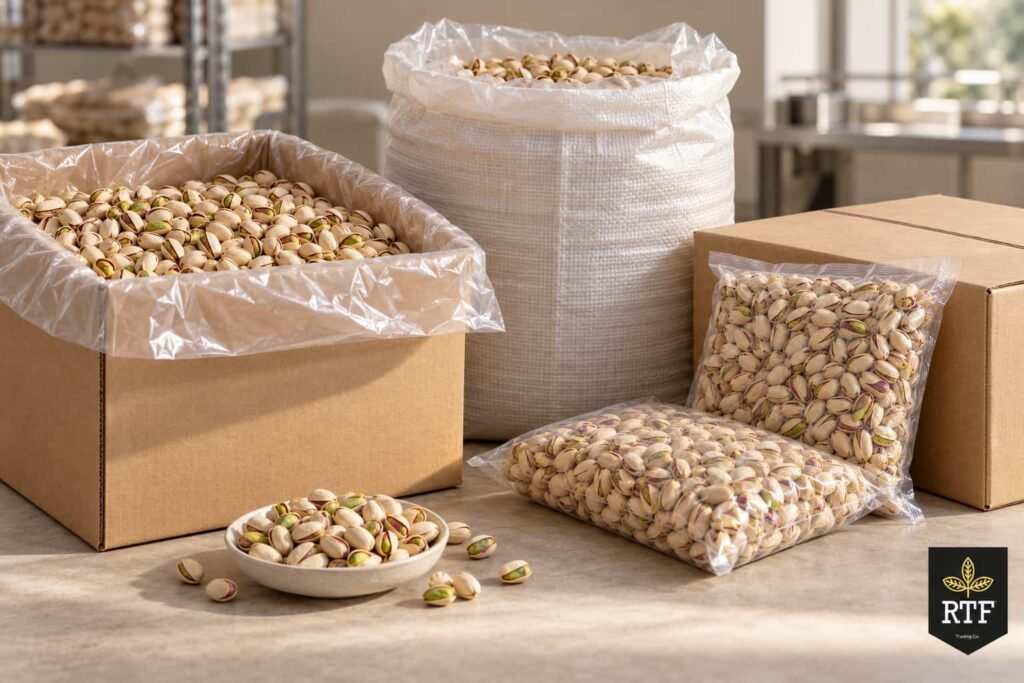
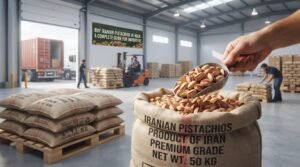
Packaging affects shipping efficiency, handling, product protection and overall purchasing cost. For bulk export shipments, pistachios may be packed in cartons or suitable food-grade bags. The appropriate packaging depends on the product, customer requirements and transport conditions.
Carton Packaging
Cartons can provide convenient handling and organized loading. They may be suitable for buyers who require defined unit weights or easier warehouse distribution.
Bag Packaging
Food-grade bags are another option for bulk shipments. The bag material, weight, moisture protection and handling requirements should be agreed upon before production.
Container Loading Capacity
The quantity of pistachios that can be loaded into a 20-foot or 40-foot container depends on the packaging dimensions, pallet configuration, permitted payload and shipping conditions.
Container capacity should therefore be calculated using the confirmed packaging specification rather than a universal number. For accurate shipment planning, buyers should request a loading estimate based on their selected product and packaging format.
What Should Buyers Check Before Ordering Iranian Pistachios?
A successful bulk purchase begins with a clear technical specification. Before requesting a final quotation, buyers should confirm the following information.
| Specification | What to Confirm |
|---|---|
| Variety | Akbari, Ahmad Aghaei or Fandoghi |
| Size | Required ounce range |
| Opening method | Naturally or mechanically opened |
| Closed-shell tolerance | Maximum acceptable percentage |
| Defects | Agreed limits and inspection criteria |
| Appearance | Shell color and size uniformity |
| Moisture | Agreed maximum and test method |
| Food safety | Applicable tests and destination requirements |
| Packaging | Type and net weight per unit |
| Quantity | Total order volume |
| Delivery | Destination and Incoterm |
| Documentation | Required certificates and inspection reports |
Buyers should request a representative sample when practical and confirm whether the sample reflects the final shipment grade. For larger transactions, a written specification and agreed inspection procedure can reduce misunderstandings between the buyer and supplier.
Frequently Asked Questions
What Is the Main Difference Between Akbari and Ahmad Aghaei Pistachios?
Both are Iranian long pistachio varieties. Akbari is generally recognized for its elongated premium appearance while Ahmad Aghaei typically has a relatively slender shape. The best choice depends on the required size, quality and market positioning.
Is Akbari Better Than Fandoghi?
Not in every application. Akbari is often preferred for premium presentation, whereas Fandoghi can offer commercial advantages for bulk distribution and price-sensitive purchasing.
Which Iranian Pistachio Is the Largest?
Large Akbari grades are among the notable options in Iranian pistachio trading. Kalleh Ghouchi, also known as Jumbo, is another variety associated with large nut sizes. Actual size must be confirmed by the ounce grade rather than the variety name alone.
What Does 20/22 Mean in Pistachio Trading?
It indicates approximately 20 to 22 pistachios per ounce. Lower counts generally represent larger nuts.
Which Pistachio Variety Is Best for Export?
There is no single best variety for every export market. Akbari, Ahmad Aghaei and Fandoghi can all be suitable when their grade, price and quality match the buyer’s requirements.
Are Naturally Opened Pistachios Better?
Naturally opened pistachios are often preferred by buyers specifically seeking that product category. Mechanically opened pistachios serve different commercial requirements. Both must be evaluated against their agreed specifications and applicable safety standards.
Can Buyers Request Custom Sizes and Packaging?
Bulk buyers can specify their preferred size, grade and packaging when requesting a quotation. Actual availability and customization options must be confirmed by the supplier.
Final Comparison: Which Iranian Pistachio Should You Choose?
Akbari, Ahmad Aghaei and Fandoghi each serve different commercial needs.
Choose Akbari when large size, elongated shape and premium presentation are priorities.
Consider Ahmad Aghaei when you need an attractive long pistachio variety with flexibility across different wholesale and retail applications.
Evaluate Fandoghi when bulk purchasing economics, a round shape and commercial value are important.
The variety is only the starting point. A reliable purchasing decision also requires evaluation of size, opening percentage, defect tolerances, food safety, packaging and delivery terms.
For importers, the best pistachio is the one that consistently meets their customers’ expectations at a commercially sustainable landed cost.
Request a Bulk Iranian Pistachio Quotation
Looking to source Akbari, Ahmad Aghaei or Fandoghi pistachios for your business? RTF Nuts can be contacted to discuss your purchasing requirements and request information about available products and export specifications. When submitting your inquiry, include your preferred variety, size range, estimated order quantity, destination country and packaging requirements.
Request a Quote | Contact RTF Nuts Sales Team