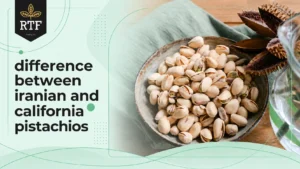
For wholesale buyers, choosing between Iranian and California pistachios is not simply a matter of origin. The difference between Iranian and California pistachios can be seen in commercial varieties, flavor, appearance, pricing factors, and, for European importers, some of the requirements involved in bringing the product into the market.
California offers a highly developed pistachio industry with established grading and large-scale production. Iran, meanwhile, gives buyers access to several distinct commercial varieties, each with its own shape, size, and flavor characteristics. This California vs Iranian pistachios comparison looks at those differences from a wholesale buyer’s point of view.
iranian pistachios vs california
One of the first things to keep in mind when comparing the two is origin, as one might expect: Iranian pistachios vs California. The different types of cultivars grown, different climates and different growing regions all have an impact on the end products and can be important to wholesale buyers.
Origin and Growing Regions
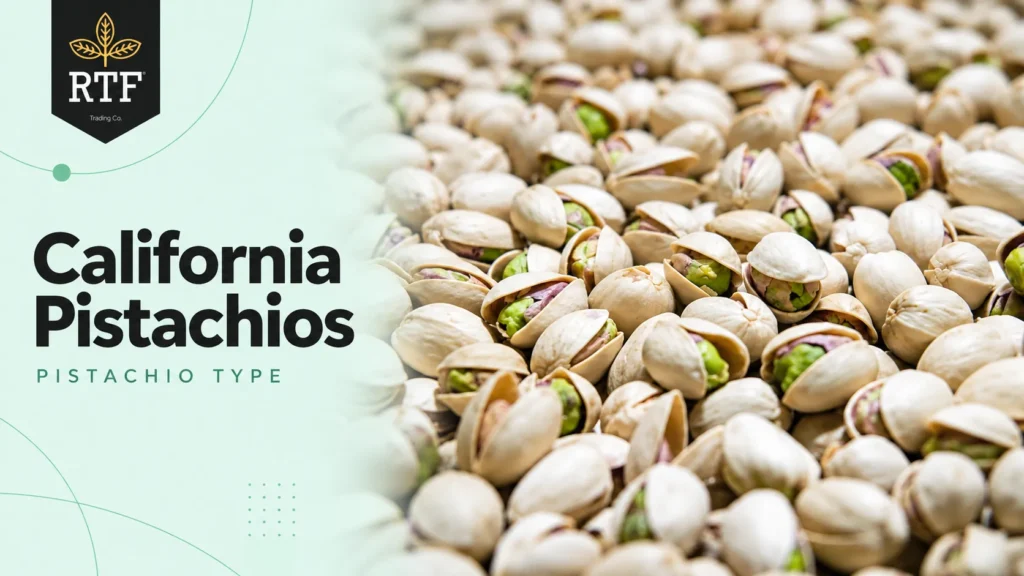
California pistachio production is concentrated mainly in the San Joaquin Valley. The region’s hot, dry summers and sufficiently cool winters are well suited to pistachio cultivation. Kerman has historically been one of the main cultivars, while Golden Hills and Lost Hills have also become commercially important. The latter two generally mature earlier than Kerman.
Iran has several established pistachio growing regions, with Kerman Province and Rafsanjan among the best known internationally. Iranian production is also notable for its variety. Fandoghi, Kalleh Ghouchi, Akbari, and Ahmad Aghaei are all recognized commercial cultivars rather than simply different size grades of the same nut.
| Region | Main growing area | Typical climate | General harvest period |
| California | San Joaquin Valley | Hot, dry summers; cool winters | Late August to September, depending on cultivar |
| Iran | Kerman, Rafsanjan and other producing regions | Arid to semi-arid; hot summers and cold winters | Mainly September, depending on cultivar and location |
Iranian harvest dates also vary by cultivar. Kalleh Ghouchi is generally harvested earlier than late-ripening varieties such as Akbari. This variety in harvest timing gives exporters and processors different windows for handling new-crop products.
Taste, Flavor and Aroma Differences
Flavor is one area where the difference between the two origins becomes particularly interesting, but it is better to compare cultivars than make a blanket statement about an entire country.
A published sensory and aroma study compared roasted Fandoghi and Kerman pistachios. Fandoghi showed more odor-active regions and stronger roasted, nutty, and chocolate/coffee characteristics in that study, while Kerman scored higher for a green sensory note. The researchers described Fandoghi as having the richer aromatic profile of the two samples tested.
This does not mean every Iranian pistachio will automatically taste stronger than every California pistachio. Roasting temperature, freshness, storage, maturity, and cultivar all affect the final pistachio taste profile.
Iran does, however, offer buyers more established commercial cultivars to choose from. Fandoghi, Akbari, Ahmad Aghaei, and Kalleh Ghouchi do not have identical sensory characteristics. Research on Iranian cultivars has also found differences in their volatile composition after roasting.
For a buyer, this creates useful flexibility. A snack producer looking for a particular roasted character may have different requirements from a confectionery manufacturer concerned with kernel flavor, or a premium retailer focused on both taste and presentation.
California pistachios can offer a clean and familiar profile, while Iranian varieties give buyers more room to select a cultivar according to the desired character of the final product. The best way to make that decision is still to test a representative sample from the actual commercial lot.
Physical Characteristics Comparison
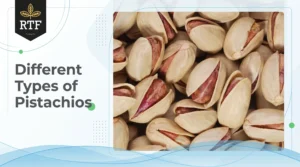
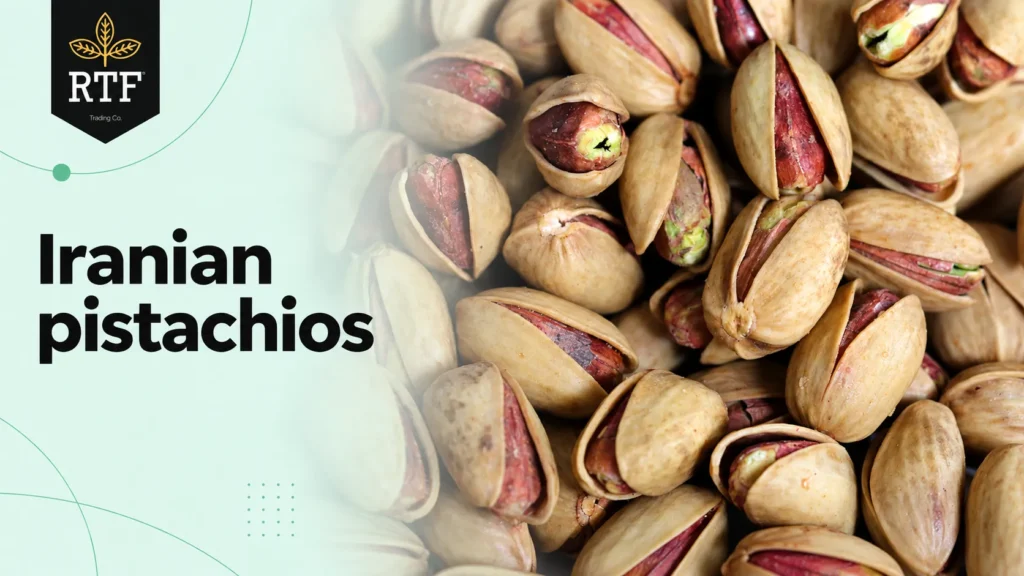
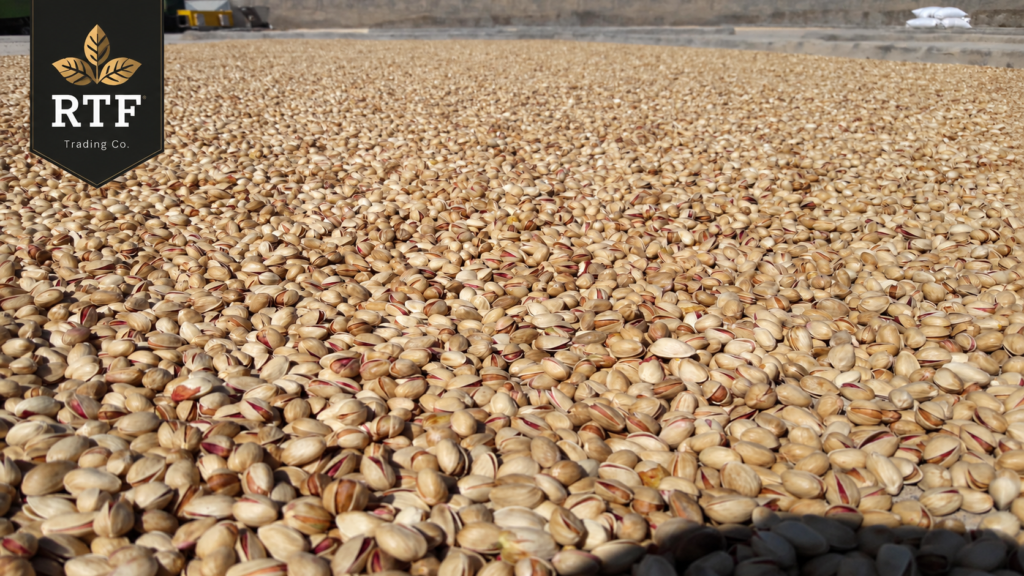
The visual difference is easier to notice. Iranian pistachios come in several clearly recognizable commercial forms. Fandoghi is a round variety, Kalleh Ghouchi is known for its large jumbo shape, and Akbari and Ahmad Aghaei belong to the long-pistachio group. Akbari is particularly elongated and is often selected for markets where size and presentation matter.
California cultivars also differ in size and splitting characteristics, but the commercial range is less centered on distinctly different long, round, and jumbo market types. Research from the University of California shows, for example, that Golden Hills and Lost Hills can produce a higher proportion of edible split nuts than Kerman under comparable conditions.
| Feature | California pistachios | Iranian pistachios |
| Size | Available in standardized commercial size ranges | Varies substantially by cultivar and grade |
| Shape | Usually relatively uniform within each cultivar | Round, long and jumbo commercial types |
| Shell color | Generally light cream to ivory | Usually cream to beige, depending on cultivar and processing |
| Split opening | Depends on cultivar and crop conditions | Depends on cultivar, crop year and grade |
| Kernel appearance | Green-yellow kernel with reddish or purple skin | Kernel shape and green intensity vary between cultivars |
For Iranian pistachio quality for export, cultivar is only part of the specification. Wholesale buyers should also compare nut count, naturally open percentage, closed shells, blanks, moisture, shell staining, defects, aflatoxin results, and crop year.
This is especially important when comparing prices. A small round Fandoghi and a large long Akbari are not equivalent products simply because both come from Iran.
Nutritional Value Comparison
Both California and Iranian pistachios are nutrient-dense foods containing protein, fats, carbohydrates, minerals, and naturally occurring plant compounds.
The figures below provide a useful reference, but they should not be treated as proof that origin alone causes the nutritional differences. The two published datasets were produced independently rather than through a controlled head-to-head study.
| Nutrient per 100 g | California commercial reference data | Iranian published reference data |
| Energy | 562 kcal | 594 kcal |
| Total fat | 45.39 g | 56 g |
| Protein | 20.27 g | 19.3 g |
The California-side technical data reports 562 kcal, 45.39 g of fat and 20.27 g of protein per 100 g of raw kernels. Published Iranian industry data, citing the Iran Pistachio Research Institute, reports 594 kcal, 56 g of fat and 19.3 g of protein.
Cultivar and growing conditions can influence composition as well. Research on California Kerman and Golden Hills pistachios, for example, has found that microclimate can affect fat and fatty-acid characteristics.
For food manufacturers, the most useful pistachio nutritional value is therefore the specification for the exact lot being purchased, particularly when preparing nutrition labels.
Price and Market Factors
Neither Iranian nor California pistachios are always the cheaper option. The result of a pistachio price comparison depends on cultivar, grade, size, crop volume, natural opening percentage, processing, packaging, freight, exchange rates, and the destination market.
Iran’s wider commercial variety range can be useful here. Buyers are able to source different products for different market positions rather than compare a single type. A premium long Akbari, for example, should not be expected to compete at exactly the same price level as a smaller round Fandoghi.
California pricing is also affected by cultivar, size, crop conditions, and demand. Pistachio trees have an alternate-bearing tendency, so crop availability can change from one season to another.
For importers, several costs need to be considered together:
- product variety, grade and size;
- FOB or other agreed purchase terms;
- exchange rate;
- freight and insurance;
- customs duty and clearance;
- laboratory testing and inspection;
- packaging requirements;
- payment and financing conditions.
The lowest quotation at origin is not necessarily the lowest landed cost. Wholesale buyers should compare offers using the same product specification and Incoterm.
Export Regulations and Trade Considerations for European Buyers
European buyers need to consider food-safety rules regardless of whether they source from California or Iran.
EU Regulation 2023/915 sets maximum aflatoxin levels for pistachios. Pistachios intended to undergo sorting or another physical treatment have maximum levels of 12 μg/kg for aflatoxin B1 and 15 μg/kg for total aflatoxins. For pistachios placed on the market for final consumers or used as a food ingredient, the limits are 8 μg/kg and 10 μg/kg respectively.
Border-control intensity, however, is reviewed and updated multiple times a year under Regulation (EU) 2019/1793, and the list of covered origins, products, and check frequencies changes between updates. As of early 2026, an amendment to this regulation (Commission Implementing Regulation (EU) 2026/194) raised the mandatory check frequency to 50% for pistachios originating in Türkiye and for U.S.-origin pistachios dispatched to the EU from Türkiye. Whether pistachios of Iranian origin are currently listed under increased controls (and at what frequency) should be confirmed directly against the latest annex of Regulation (EU) 2019/1793 before a contract is signed, since reports on Iran’s current status vary and this list is not static.
| Topic | California supply | Iranian supply |
| EU aflatoxin limits | Applicable under Regulation (EU) 2023/915 | Applicable under Regulation (EU) 2023/915 |
| Enhanced aflatoxin controls | Route-specific: pistachios dispatched via Türkiye currently face a 50% check frequency | Current listing status should be verified against the latest annex of Regulation (EU) 2019/1793 |
| Customs classification | Depends on exact product form (CN/TARIC code) | Depends on exact product form (CN/TARIC code) |
| Documentation | Prepared according to the applicable route and product code | Prepared and verified as part of standard export documentation for each shipment |
| Transaction screening | Standard commercial and regulatory checks | Handled as part of standard export compliance, following current EU rules on counterparties and banking |
Reports on the trading status of Iranian pistachios in the EU market have varied over time, and this is an area where information changes quickly. Rather than relying on any single report, buyers and exporters should verify current requirements directly against the official EU sources before each shipment. Working with an experienced exporter who tracks these updates and prepares documentation in advance significantly reduces this burden for the buyer.
The exact pistachio export regulations in the EU, tariff treatment, and documentation should always be rechecked before shipment. This section should not be treated as legal advice.
Sustainability and Water Use
Water use is an important issue in both producing regions. California pistachio orchards depend on irrigation. University of California guidance reports annual water use of roughly 40–48 inches for mature pistachio orchards across the state, while irrigation methods can include drip and other systems designed to control water delivery more efficiently.
Iranian producers also operate under dry conditions, and water scarcity is a serious challenge in traditional pistachio-growing regions. In 2026, FAO highlighted drought, heat and declining water availability affecting Iranian pistachio farmers, along with efforts to improve farm practices and resilience. It would therefore be misleading to describe either origin as automatically more sustainable.
European buyers with ESG requirements should look beyond country of origin and ask individual suppliers about irrigation methods, water sources, farm traceability, pesticide management, salinity management, processing efficiency, and available sustainability certifications.
Which Pistachio Should Wholesale Buyers Choose?
There is no universal winner in the California vs Iranian pistachios comparison. California can be a practical option for buyers who value standardized commercial supply and established large-volume processing. Iranian pistachios become particularly interesting when buyers want more choice in cultivar, shape, size, and flavor characteristics.
The final decision should start with the intended use:
- Define your product. Retail in-shell pistachios, roasted snacks, confectionery kernels and pistachio paste have different quality priorities.
- Choose the required market position. Premium presentation may favor a different cultivar from a price-sensitive industrial application.
- Compare equivalent specifications. Size, crop year, natural opening, moisture and defect limits should be the same when comparing quotations.
- Request samples. Flavor and appearance should be tested using the product that will actually be supplied.
- Review food-safety documents. Aflatoxin analysis and other destination-market requirements should be checked before placing a large order.
- Calculate landed cost. Include freight, customs, inspections and financing rather than relying on the supplier’s unit price alone.
- Check supply continuity. Make sure the supplier can maintain the required specification across repeat shipments.
For buyers interested in Iranian supply, the main advantage is not that every Iranian pistachio is automatically “better.” It is the range of choices available. Akbari, Ahmad Aghaei, Fandoghi and Kalleh Ghouchi allow wholesalers to source noticeably different products for different customers and price segments.
The better purchase is ultimately the one that meets the buyer’s specification, passes the required safety controls, and reaches the destination at a commercially acceptable landed cost.
FAQ
Is Iranian pistachio better than California pistachio?
Neither is always better. Iranian pistachios offer more commercial varieties, shapes, and flavor profiles, while California pistachios are known for standardized grading and consistent large-scale supply.
Why is Iranian pistachio often cheaper than California pistachio?
Iranian pistachios are not always cheaper. Price depends on the variety, size, grade, crop year, exchange rate, shipping costs, and market demand. Some premium Iranian varieties can cost more than standard grades.
Can European buyers legally import Iranian pistachios?
Yes. Iranian pistachios can be imported into the EU, but they must meet EU food-safety and import requirements. As of September 2026, Iranian pistachios are subject to enhanced controls for aflatoxins, including a 50% frequency of identity and physical checks.
What is the shelf life difference between Iranian and California pistachios?
There is no fixed shelf-life advantage based on origin alone. Shelf life depends more on moisture, processing, packaging, storage temperature, and exposure to air and light.