A November 2, 2026 market reference listed selected Iranian in-shell pistachios at US$12.50–14.00 per kg EXW Rafsanjan, equivalent to US$12,500–14,000 per metric ton before freight and other costs outside that delivery term. The range covered specified sizes of round Fandoghi and long Ahmad Aghaei. It is a dated supplier reference for budgeting. An RTFNUTS quotation depends on the lot, size, order volume, packing and named delivery point. QIT Foods’ Iranian pistachio price reference
For a bulk order, the number worth comparing is the cost per kilogram of pistachios you can sell at the agreed grade. Start with the quoted rate, add the costs required to bring both offers to the same receiving point, and allow for any expected loss in sorting or repacking. A buyer ordering whole pistachios for retail packs can use this method to compare two grades, two suppliers or two delivery terms on the same basis.
Iranian Pistachio Price per Kg by Variety
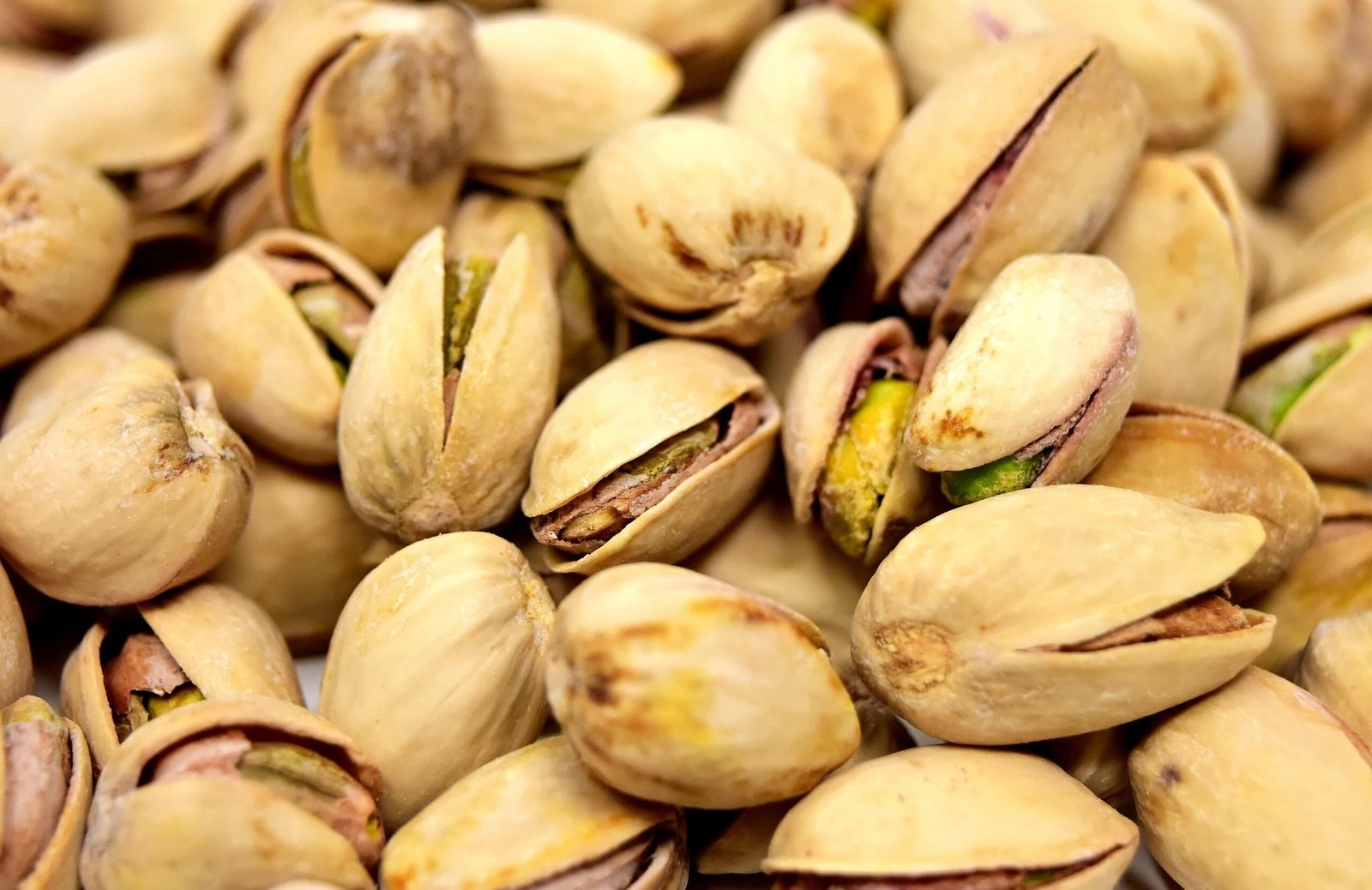
The table gives reference points for four common Iranian in-shell varieties. The November entries are selected rows from QIT Foods’ EXW Rafsanjan table. The September entries come from a separate supplier list summarized by Myindustry under an EXW/FOB Bandar Abbas reference basis. Keep the September rows separate from the November rows when setting a budget. The sources cover different dates, specifications and delivery bases, so the figures cannot establish a price ranking across all four varieties.
| Iranian in-shell variety | Size, nuts per oz | Published USD per kg | USD per metric ton | Reference date and basis |
|---|---|---|---|---|
| Fandoghi (Round) | 30/32 | $12.50 | $12,500 | Nov 2, 2026 · EXW Rafsanjan |
| Fandoghi (Round) | 32/34 | $13.13 | $13,130 | Nov 2, 2026 · EXW Rafsanjan |
| Ahmad Aghaei (Long) | 26/28 | $14.00 | $14,000 | Nov 2, 2026 · EXW Rafsanjan |
| Ahmad Aghaei (Long) | 28/30 | $13.65 | $13,650 | Nov 2, 2026 · EXW Rafsanjan |
| Akbari (Long, naturally open) | 24/26 | $12.80–13.80 | $12,800–13,800 | Sep 21, 2026 · separate EXW/FOB benchmark |
| Kalleh Ghouchi (Jumbo, naturally open) | 24/26 | $12.30–13.80 | $12,300–13,800 | Sep 21, 2026 · separate EXW/FOB benchmark |
Published references are available in QIT Foods’ November table and Myindustry’s September 2026 quotation summary.
Use the figures to set a preliminary budget. For an order, check the RTFNUTS wholesale in-shell pistachio range and ask for a written offer for the product you intend to sell. If you can accept a neighboring size, include it in the inquiry so both options can be priced against the same packing, volume and destination.
Request a Bulk Pistachio Quote
Fandoghi Pistachio Price for Round, In-Shell Orders
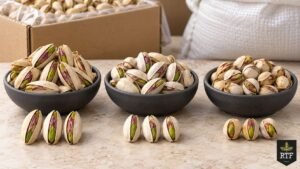
Fandoghi is a compact round pistachio that buyers can evaluate for volume distribution and mixed-nut assortments. If you sell through wholesalers or repack into regular snack bags, ask for pricing on two adjacent count ranges and test the samples against your target pack. The value of the larger grade depends on what your customer will pay for the difference in appearance.
Compare the actual lots even when two quotations say Fandoghi and use the same count range. One offer may specify a cleaner shell finish or tighter tolerances on unopened nuts. The RTFNUTS Round Fandoghi product page gives you a starting point for the specification. In the price request, state whether your priority is a particular count, a consistent round appearance across retail packs or a target cost for a wholesale program.
Ahmad Aghaei Pistachio Price for Long In-Shell Grades
Ahmad Aghaei is worth pricing when your customers prefer a long, slender pistachio. In the November example, the same supplier listed 26/28 at $14.00/kg and 28/30 at $13.65/kg on the same EXW basis. The difference was $0.35/kg, or $3,500 on a 10 metric ton order before other costs. That is the amount the larger specification has to justify through a better selling price, better customer acceptance or both.
Ask for samples of both counts if the customer allows either. A sample packed in the bag or tray you actually use can reveal whether the size difference is visible enough to influence a purchase. If the customer contract specifies one size, quote that size first and ask the supplier to price any acceptable substitute as a separate option.
Akbari Pistachio Price for Premium Long Grades
Akbari’s elongated shape makes it a candidate for premium whole-pistachio displays and specialty retail packs. When ordering wholesale Akbari pistachios, ask for a quote that includes the shell-opening method, count range and any appearance tolerances your customer needs. A premium price makes more sense when you can point to characteristics the buyer will see after the goods are packed.
Two offers at 24/26 can still yield different-looking packs. Assess the consistency of length and shape, the opening and the visual condition of the shells in representative samples. If the price premium is material to the deal, ask the customer to approve the sample alongside the target selling price before committing to the full volume.
Kalleh Ghouchi Pistachio Price for Jumbo Round Grades
Kalleh Ghouchi is worth pricing when the customer wants a broad, round jumbo pistachio. The term jumbo is too loose for a purchase specification on its own. Ask the seller to confirm the count range and inspect the appearance and kernel condition in the offered sample.
Compare Kalleh Ghouchi with the round grade your customer already buys. Check whether a broader nut supports a higher selling price or satisfies a specification that the other lot cannot meet. If the customer is also open to long pistachios, use the comparison of Akbari, Ahmad Aghaei and Fandoghi to narrow the alternatives before requesting comparable quotes.
What Changes the Wholesale Price of Iranian Pistachios?
Size and the Tolerance Around the Count
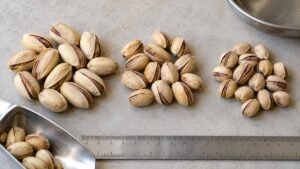
In-shell size is commonly quoted as nuts per ounce. A 24/26 specification describes a larger average nut than 30/32 because fewer nuts are needed to make up an ounce. The RTFNUTS pistachio size chart explains how to interpret the counts. On the quotation itself, ask how the supplier measures the range and how much variation is allowed in the shipment.
The purchase decision often turns on uniformity. If your retail customer expects an even-looking pack, an offer allowing a wider spread of sizes may increase sorting work or produce more packs outside the agreed appearance. Compare the premium for a tighter specification with the cost of achieving the same result after delivery.
Naturally Open, Mechanically Opened and Closed-Shell Lots
A naturally open pistachio splits as it develops. A mechanically opened lot is processed to open the shells after harvest. A closed-shell lot has a different commercial use because the buyer may need an additional opening or shelling step. If your customer requires naturally open pistachios, write that requirement into the quote and confirm what proportion of unopened nuts the shipment may contain.
Price closed-shell material separately when it suits your business model. The RTFNUTS closed-shell pistachio range covers this format. To compare it with an open-shell offer, include any extra processing, yield loss and the value of the output you will actually sell. A lower raw purchase price has limited value if the goods cannot be sold through the channel you budgeted for.
Lot Quality, Crop Year and Availability
Ask for the crop year, the offered lot or stock basis, and any grade criteria that affect acceptance. Discuss shell staining, unopened nuts, empty shells and other defects your customer tracks. Define how each tolerance is measured and whether the number is based on count or weight. A one-word grade such as premium does little to resolve a disagreement if the acceptance criteria were never agreed.
A general sample can help you choose a variety. A representative sample linked to the offered lot is more useful for approving an order. If the first sample cannot represent the lot that will ship, agree how the shipment lot will be verified before dispatch. RTFNUTS’ guide to pistachio quality control before export explains what to check at that stage.
Raw, Roasted and Salted Specifications
A raw in-shell quote suits buyers who intend to roast or season the nuts locally. A finished roasted or salted specification can suit distributors that want fewer processing steps after delivery. To compare both routes, estimate the delivered cost of the raw lot, your processing and packing costs, and the weight of finished product that meets your customer’s specification.
State whether the requested price applies to the raw or finished net weight. If buying a finished product, give the supplier the roast or seasoning requirements you need and ask how the goods will be packed. Where the customer has a preferred sample, use it as the reference so both offers are judged against the same finished product.
Order Volume, Packaging and Shipment Timing
Specify your order quantity as net product weight, excluding bags, cartons and pallets. A trial order may carry a different price per kilogram from a repeat shipment because bulk pistachio packaging, handling and freight costs can vary with order volume. If you plan to buy regularly, request separate quotes for the trial order and your expected volume per shipment. Ask the supplier to confirm the minimum order quantity for each product grade and packaging format you are considering.
Packaging can also change the comparison. A buyer that will repack immediately may want standard bulk packaging. A distributor that handles multiple warehouse transfers may require a different pack or pallet configuration. Ask for the net weight per package and any packing or labeling charges outside the quoted price. If you need delivery before a promotion, give the expected shipment window so the seller can quote stock and timing together.
How to Compare FOB, CFR and CIF Pistachio Quotes
The price per kilogram only makes sense alongside the delivery term and the place named in the quotation. A warehouse collection price and a price that includes ocean freight cover different costs. If suppliers use different terms, ask them to quote on the same basis or use your freight forwarder’s figures to bring both offers to a common destination. Keep the currency, net order weight and expected shipment period consistent as you compare them.
| Delivery term | What to check before comparing the rate |
|---|---|
| EXW, named place | Confirm the pickup point. Budget separately for the loading, onward transport and export arrangements that fall to you under the agreed terms. |
| FOB, named port of shipment | The seller delivers the goods on board at the agreed origin port. Obtain a separate ocean freight quote and check the onward costs you will pay. |
| CFR, named port of destination | The seller arranges and pays for freight to the named destination port. Establish how you will insure the shipment and which destination charges still apply. |
| CIF, named port of destination | The seller arranges freight and the required insurance cover to the named destination port. Review the coverage and budget for costs outside the seller’s obligations. |
For FOB, CFR and CIF, the transfer of risk is tied to delivery on board at the port of shipment. With CFR and CIF, the seller pays the freight to the named destination port while the risk transfers earlier. Ask your freight forwarder which term fits the route and handover, especially if your shipment is containerized and the goods are handed to the carrier at a terminal before loading. International Chamber of Commerce guidance on Incoterms® 2020
Compare the Same Delivery Point and Weight
A CIF price to one port may be less attractive than a higher CIF price to another port if moving the product from the first port to your warehouse costs more. Set the warehouse or other final receiving point at the top of the comparison sheet. Then add all charges required to get each shipment to that point, checking which charges have already been included by the seller or freight forwarder.
Use the same definition of weight throughout. If a supplier quotes $12.60/kg for 10,000 kg of net pistachios, the product value is $126,000. The transport paperwork may show a higher gross weight because it includes packaging and other materials. Freight costs can reflect shipping weight or container arrangements, but your purchase cost per kilogram should use the net product weight you paid for. When you compare a rate per metric ton with a rate per kilogram, divide the metric ton rate by 1,000.
Separate Landed Cost from Repacking Cost
Landed cost for purchasing purposes can include the product, transport, insurance, handling, clearance and other applicable nonrecoverable charges through your chosen receiving point. Ask your broker for the charges and treatment applicable to the shipment. Recoverable taxes can still affect cash flow, so show them separately if your finance team wants to see the cash needed before release.
If the nuts will be packed locally, calculate a second figure that includes the relevant sorting and repacking expenses. Packaging materials, labor and the usable output weight matter at this stage. Keeping both figures visible helps your team identify whether a cost difference comes from the freight route, the condition of the pistachios or the work required to get them ready for sale.
Which Bulk Pistachio Quote Costs Less? A Worked Example
Assume a buyer is considering two offers for 10,000 kg of naturally open Fandoghi. Both offers meet the buyer’s minimum purchase specification. Supplier A quotes FOB at $12.60/kg. Supplier B quotes CIF at $12.92/kg. The buyer requests a freight estimate for A and asks the broker to estimate charges beyond the quoted term for both shipments. The values below are illustrative and use the same destination warehouse for both offers.
| Cost for 10,000 kg net | Quote A · FOB | Quote B · CIF |
|---|---|---|
| Supplier invoice | $126,000 | $129,200 |
| Buyer-arranged ocean freight and insurance | $4,100 | Included in quoted term |
| Other applicable costs through warehouse receipt | $3,200 | $3,400 |
| Total landed cost | $133,300 | $132,600 |
| Landed cost per net kg received | $13.33 | $13.26 |
Quote A starts $0.32/kg lower on the supplier invoice. Once freight, insurance and the remaining charges are included, Quote B costs $700 less at the warehouse. If the buyer intends to sell both lots as the same retail grade, the share of each shipment that meets that grade can change the decision.
Calculate the Cost per Sellable Kilogram
Suppose a representative sorting trial suggests that 98% of Quote A’s lot and 96% of Quote B’s lot will go into the target retail pack. On a 10,000 kg shipment, that leaves 9,800 kg and 9,600 kg respectively. Before repacking labor and any recovery from selling the downgraded portion, the cost per sellable kilogram is $13.60 for Quote A and $13.81 for Quote B, rounded to two decimals.
The purchasing formula is total landed cost ÷ kilograms meeting the target sale specification. If your objective is the cost of finished retail packs, add relevant sorting and packaging costs to the numerator. Subtract any realistic recovery from downgraded material if it has an established outlet. Keep the cost per sellable kilogram and the assumptions behind it in the same sheet so a colleague can update the calculation when actual intake results are available.
Use the Sample to Test the Price Difference
The sorting percentages above are assumptions for the example. On a real order, agree how the sample is drawn, sort the samples against your own sale criteria and record the results. If a small sample gives an uncertain result, run the calculation with a range of plausible yields. That shows whether the quote still fits your margin when more nuts fall outside the desired grade than you first expected.
Ask which costs are fixed per shipment and which change with volume. A higher port or handling charge per kilogram on a small trial shipment may carry less weight on a larger order. Price the trial on its own merits, and request a separate quotation for the repeat shipment before using the trial figures in your ongoing purchasing budget.
Work Back From the Selling Price
If you supply retailers or sell under your own brand, use the expected selling price to set a maximum purchasing cost. Suppose your target wholesale selling price is $16.50 per sellable kilogram and you need a 15% gross margin on that sale. Your maximum cost of goods is approximately $14.03 per sellable kilogram, before any expenses your business tracks outside cost of goods. If local packing costs $0.60 per sellable kilogram, that leaves about $13.43 for the landed nuts after allowing for sorting losses. Use unrounded numbers in your worksheet and apply your own margin definition consistently.
This calculation gives you a price limit for the exact product you plan to sell. If a larger Akbari grade takes you over the limit, price an adjacent count or ask the customer to approve a higher selling price. If you sell a smaller Fandoghi grade at a different retail price, calculate its limit separately. Comparing both grades against the same selling price would hide the commercial value of the grade your customers prefer.
For contracts priced per pack, convert each figure using the declared net pack weight. A difference of $0.20 per kilogram is $0.05 on a 250 g pack. Across 40,000 packs, that becomes $2,000 before any change in packaging costs, yield or selling price. This is the scale on which a purchasing decision for a repeat order should be evaluated.
How to Request a Wholesale Pistachio Price You Can Use
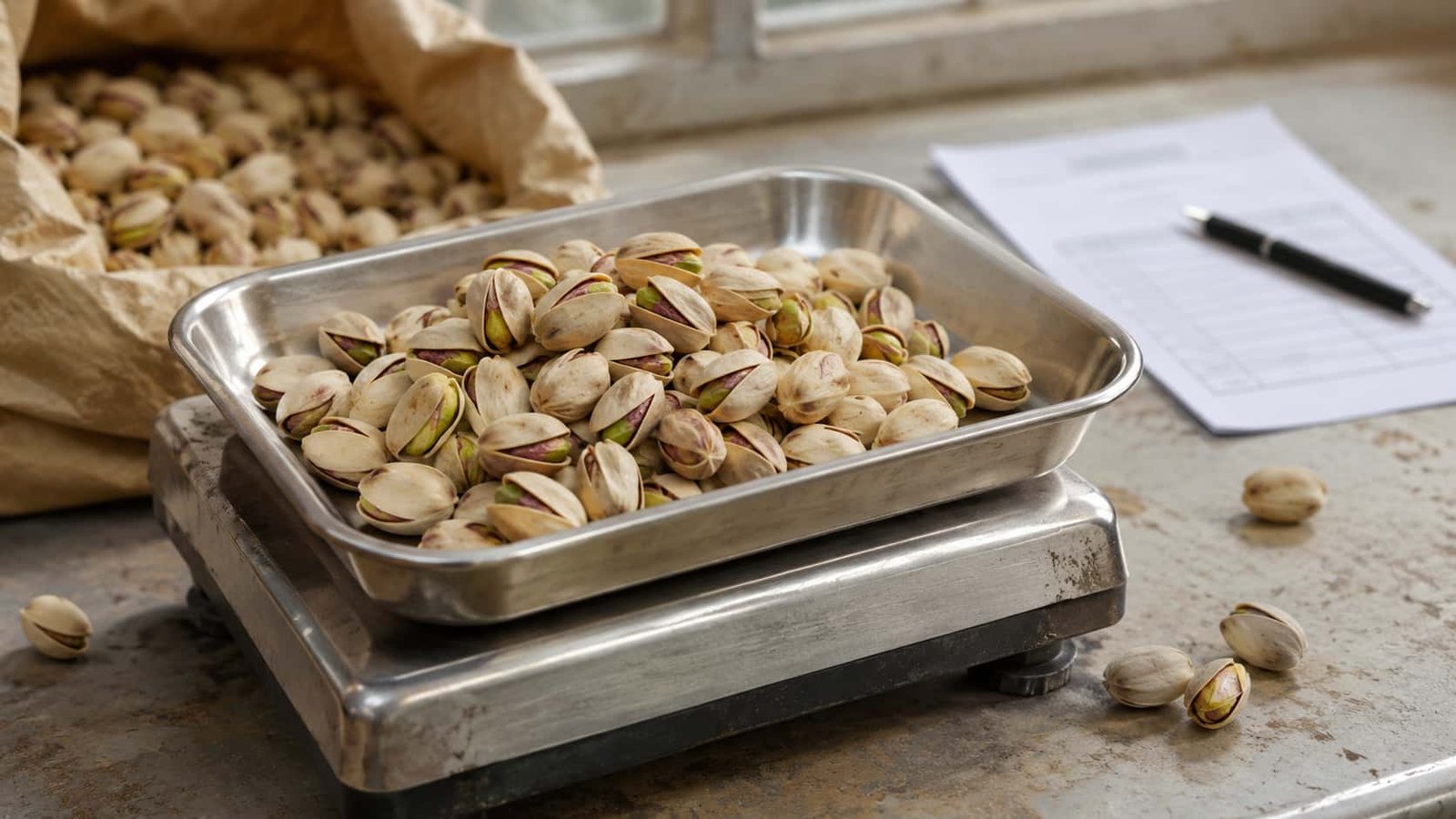
A useful inquiry starts with enough detail for a supplier to match the quote to a lot and a shipment. “Send your best price for one ton of pistachios” leaves the seller to guess the variety, size, shell opening and place of delivery. That can produce a quick figure and several rounds of clarification. A short specification gives you a figure you can take into a purchasing discussion.
| Information to send | Example for a bulk inquiry |
|---|---|
| Variety and product form | Iranian Fandoghi, whole in-shell |
| Size and acceptable alternative | 30/32 nuts per ounce, with 32/34 priced separately if available |
| Shell and processing | Naturally open, raw and unsalted |
| Quantity and packing | 10,000 kg net, quote suitable standard bulk packaging |
| Delivery and timing | CIF to the named destination port, with the preferred shipping window |
| Sample and documentation | Representative sample and list of available lot documents before order confirmation |
Add any customer specifications that would change your decision. For example, if the maximum proportion of unopened nuts is set in your supply contract, send that limit before the supplier prices the order. If you are launching a line and have flexibility on size, say so. A separately priced alternative lets you assess what the concession saves and whether your customer accepts it.
Confirm What the Quote Includes
A written offer should let you match the price to the variety, size, shell opening, processing, packaging and net order weight. Ask the seller to state the currency, the named delivery point, the quote validity and the estimated shipment window. Where the commercial offer includes a test, inspection, custom label or packing service, confirm who pays for it and at which stage it will be completed.
If you already have a buying specification, send it with the first inquiry. If you are preparing your first purchase, the guide to buying Iranian pistachios in bulk covers the broader sourcing process. Bring the details that affect your price into the written quotation, then use the same specification when discussing a replacement lot or repeat shipment.
Check the Documents Against the Actual Lot
Ask what documentation is available for the offered product and confirm with your importer or broker what your destination requires. For example, when you need an analysis report, check whether the report can be linked to the shipment lot and whether it covers the parameters required for that purchase. A generic report from another lot may be inadequate for the buyer’s approval process. Confirm any testing or documentation costs before comparing offers.
The commercial question is who pays if another inspection, a new sample or additional testing is needed. Put those responsibilities in the purchase documents. The earlier both sides agree on how the grade will be accepted, the easier it is to judge whether the quoted price covers a lot you can receive and sell on schedule.
Record Price Validity and Stock Availability Separately
A quotation can carry a validity date while the offered size or lot remains subject to availability. Ask whether the seller can reserve the stock, what confirms the reservation and whether the freight rate expires on the same date as the product price. If an earlier quote has expired, request a fresh written offer with both the stock and shipping basis confirmed before approving it internally.
For repeat orders, establish which parts of the specification may change. A supplier may be able to repeat the agreed size and shell type even when the exact lot or crop changes. When approval is lot-specific, allow enough time to review a new representative sample before dispatch. A repeat order is easier to budget when your team knows which price and quality checks must be repeated each time.
Frequently Asked Questions About Buying Iranian Pistachios in Bulk
What Is the Wholesale Price of Iranian Pistachios per Kg?
The November 2, 2026 public EXW Rafsanjan reference put selected in-shell Fandoghi and Ahmad Aghaei grades at US$12.50–14.00/kg. Each rate referred to a specified ounce count. For a current price on your purchase, give the seller your preferred variety, size, shell-opening method, required volume and destination. QIT Foods’ November 2026 published price table
How Much Does One Metric Ton of Iranian Pistachios Cost?
Multiply the rate per kilogram by 1,000. For example, $13.00/kg equals $13,000 per metric ton of net product on the same quoted terms. If the rate is EXW, this calculation gives the value at the quoted collection point. To budget the amount payable through warehouse receipt, add the charges outside the quote that apply to your route.
Is Fandoghi Usually Cheaper Than Akbari?
Fandoghi is a practical starting point for a buyer looking for a round pistachio at a target cost. Akbari is usually considered where a long appearance can support a premium product. Individual quotations can overlap because the offered size, finish, quality, volume and delivery terms affect each price. Request both offers on the same date and delivery basis if either variety could meet your customer’s needs.
Is the In-Shell Price Comparable to the Kernel Price?
The in-shell price is based on the weight of the whole pistachio including its shell. A kernel quote applies to the product after shell removal. Buyers who can use either format should compare the cost per usable kilogram and account for shelling, sorting and losses. The in-shell versus shelled pistachio comparison gives more detail on the yield calculation.
Can I Request a Sample Before Placing a Bulk Order?
You can ask RTFNUTS about a representative sample when discussing a wholesale order. State what you will use the sample to approve, such as the count range, the shell opening or the appearance in your finished retail pack. Confirm how closely the sample represents the available lot and what sample and shipping arrangements apply to your destination.
Does a CIF Pistachio Price Cover Delivery to My Warehouse?
CIF names a destination port and includes the seller’s contracted freight and insurance to that port under the agreed term. Review the quotation for the destination costs still payable and add inland transport to your receiving point. If the goal is one comparison figure at your warehouse, ask your broker to put all remaining charges on the same cost sheet.
Get an RTFNUTS Quote for Your Bulk Order
If you know the specification, tell us the variety, count range, shell opening, net order volume and destination when you request a bulk Iranian pistachio quote. Add the delivery term you want priced and your preferred shipping window. If your customer has approved two grades, ask for both on the same terms so you can see how much each option changes the total order value.
If you are still deciding, describe the product you sell, the appearance your customers expect and the approximate volume you plan to order. Ask about available grades, a representative sample and the terms for an initial order. You can then compare the quoted price and the sample against the same retail or wholesale specification before committing to volume.