Choosing a pistachio size is more than deciding whether a nut looks large or small. For importers and wholesalers, size affects product presentation and purchasing cost. It also helps define what the supplier is expected to deliver. A quotation for 20/22 Akbari pistachios describes a different product from an offer for 30/32 Fandoghi. Understanding those numbers makes it easier to compare samples and avoid ordering a grade that does not suit your customers.
A pistachio size chart shows the approximate number of in-shell pistachios per ounce. A lower count means larger nuts because fewer pistachios are needed to reach the same weight. For example, 20/22 pistachios are larger on average than 28/30 pistachios. The numbers refer to a count by weight rather than the length of the shell in millimeters.
This guide explains common Iranian pistachio sizes and how to interpret them when sourcing wholesale products. It also covers the difference between size and quality grade so you can build a clearer specification for your next order.
Pistachio Size Chart: Common Iranian Pistachio Sizes
In Iranian pistachio trading, in-shell sizes are commonly expressed as a range of nuts per ounce. One ounce is approximately 28.35 grams. The weight includes both the shell and the kernel inside it. This distinction matters because an in-shell count does not directly measure the amount of edible kernel you will recover after shelling.
The following pistachio size chart covers common commercial ranges. The relative size descriptions are intended to help readers compare the rows. They should not be treated as universal official grade names.
| Pistachio size | Approximate in-shell nuts per ounce | Relative size within this chart |
|---|---|---|
| 18/20 | 18–20 | Largest |
| 20/22 | 20–22 | Larger |
| 22/24 | 22–24 | Large |
| 24/26 | 24–26 | Intermediate |
| 26/28 | 26–28 | Smaller |
| 28/30 | 28–30 | Smaller |
| 30/32 | 30–32 | Small |
| 32/34 | 32–34 | Smallest |
Not every variety is available in every range. Harvest conditions and sorting results influence the sizes available from a particular crop. A supplier should confirm current availability rather than assume that the full chart applies to every product.
For wholesale purchasing, use the numerical range alongside the variety name. “Ahmad Aghaei 24/26” is a clearer description than “large Iranian pistachios.” The numerical specification gives both parties a measurable reference while the variety identifies the type of product.
What Does 20/22 Mean in Pistachio Trading?
A 20/22 size indicates approximately 20 to 22 whole in-shell pistachios per ounce. It does not mean that each nut measures 20 to 22 millimeters. It also does not mean that every individual one-ounce portion must contain exactly the same number of nuts. Agricultural products naturally vary and the size designation is assessed through an appropriate sample and the agreed grading method.
The same principle applies across the chart. A 24/26 product has a higher count than a 20/22 product and therefore a lower average whole-nut weight. When comparing quotations, confirm that both suppliers are using count per ounce and referring to the same product state.
Why Does a Lower Pistachio Count Mean a Larger Size?
The relationship becomes easier to understand when the weight stays fixed. Imagine two samples that each weigh one ounce. The first contains 19 pistachios and the second contains 29. The average nut in the first sample must be heavier because fewer nuts make up the same total weight.
This explains why the numbers can seem counterintuitive at first. A larger number on the specification means more nuts per ounce rather than a larger individual pistachio. Once this relationship is clear, comparing 18/20 with 22/24 or 28/30 becomes straightforward.
How Pistachio Size Is Measured
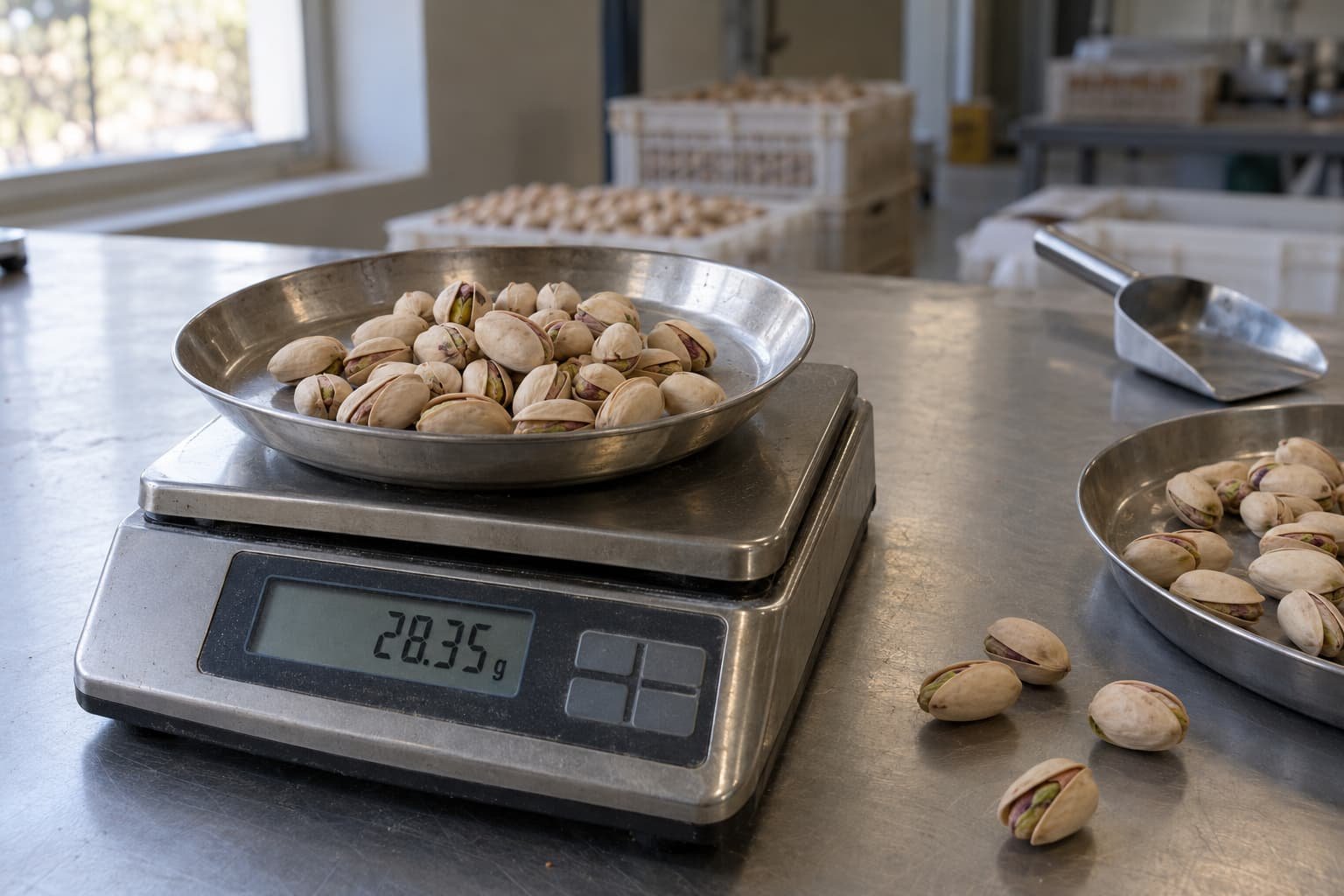
Pistachio size grading uses the relationship between quantity and weight. A basic count check can help buyers understand a sample before discussing an order. However, shipment acceptance requires more than weighing one handful. The sample must represent the lot and the assessment should follow the method agreed in the purchase specification.
A sample taken only from the top of one bag may not reflect the entire shipment. Likewise, selecting the most attractive nuts before counting creates a misleading result. Sampling is useful only when it preserves the characteristics of the product being evaluated.
Calculating Pistachio Count per Ounce
To estimate the count per ounce, weigh a sample of whole in-shell pistachios and count the nuts in it. The calculation is:
Count per ounce = number of nuts × 28.35 ÷ sample weight in grams
For example, a sample weighing 283.5 grams contains ten ounces. If it holds 230 whole in-shell pistachios, its average count is 23 nuts per ounce. That falls numerically within a 22/24 range. The result provides a useful size indication but does not independently confirm every requirement of a commercial grade.
Using a larger representative sample can make a basic check more useful than counting a single one-ounce portion. For a contractual inspection, the applicable sampling procedure and permitted tolerances should be established before shipment.
Why Average Count Does Not Tell the Whole Story
Two batches can have the same average count while showing different levels of uniformity. One batch may contain nuts that are reasonably consistent. Another may combine noticeably larger and smaller nuts that happen to produce the same average weight. Both could give a similar count result even though their appearance in a retail package is different.
This is why buyers should consider size uniformity alongside the count range. A consistent batch may suit a premium product better than a visibly mixed batch with the same average count. The specification should explain the applicable uniformity requirement or grading standard rather than leaving acceptance entirely to visual judgment.
Iranian Pistachio Sizes by Variety
Iran produces several commercially important pistachio varieties with different shapes and typical size distributions. Akbari is known for its elongated appearance. Ahmad Aghaei is also long but has a different profile. Fandoghi has a more compact round shape. These distinctions influence how the nuts look even when two products have similar count ranges.
The table below presents common commercial examples. These are indicative ranges rather than fixed biological limits or guaranteed stock.
| Iranian pistachio variety | Common commercial size examples | Typical shape |
|---|---|---|
| Akbari | 18/20, 20/22, 22/24, 24/26 | Long and elongated |
| Ahmad Aghaei | 22/24, 24/26, 26/28, 28/30 | Long and relatively slender |
| Fandoghi | 26/28, 28/30, 30/32, 32/34 | Compact and round |
The correct variety depends on more than its typical size. Buyers also need to consider the intended market and the quality of the actual lot. Our Akbari vs Ahmad Aghaei vs Fandoghi comparison explains how these varieties differ from a wholesale purchasing perspective.
Akbari Pistachio Sizes
Akbari is often considered when buyers want a long pistachio with a strong visual presence. Larger commercial grades can be suitable for premium in-shell products where appearance plays an important role. However, the variety name alone does not establish the size or quality of the shipment.
An Akbari quotation should identify the count range and the condition of the product. Buyers should also examine shell appearance and uniformity. A larger Akbari batch with uneven grading may not suit the same application as a carefully sorted batch in a slightly smaller range.
Ahmad Aghaei Pistachio Sizes
Ahmad Aghaei offers an elongated shape that can suit a range of wholesale and retail applications. Buyers may compare several count ranges to find a balance between presentation and purchasing cost. The difference between adjacent sizes should be assessed using actual samples rather than product names alone.
For repeat orders, consistency is especially useful. Agreeing on a count range and a representative appearance gives the supplier a clearer target and helps the buyer maintain a more predictable product line.
Fandoghi Pistachio Sizes
Fandoghi is commonly associated with smaller round pistachios used in volume trading. Its compact shape creates a different appearance from long varieties. A higher count range should not be interpreted as evidence of poor quality. It simply indicates a lower average whole-nut weight within the sizing system.
For buyers serving customers who accept smaller round pistachios, a well-sorted Fandoghi lot can be worth evaluating against larger alternatives. The decision should be based on the final specification and commercial requirements rather than an assumption that larger nuts are always better.
Pistachio Size in Millimeters vs Count per Ounce
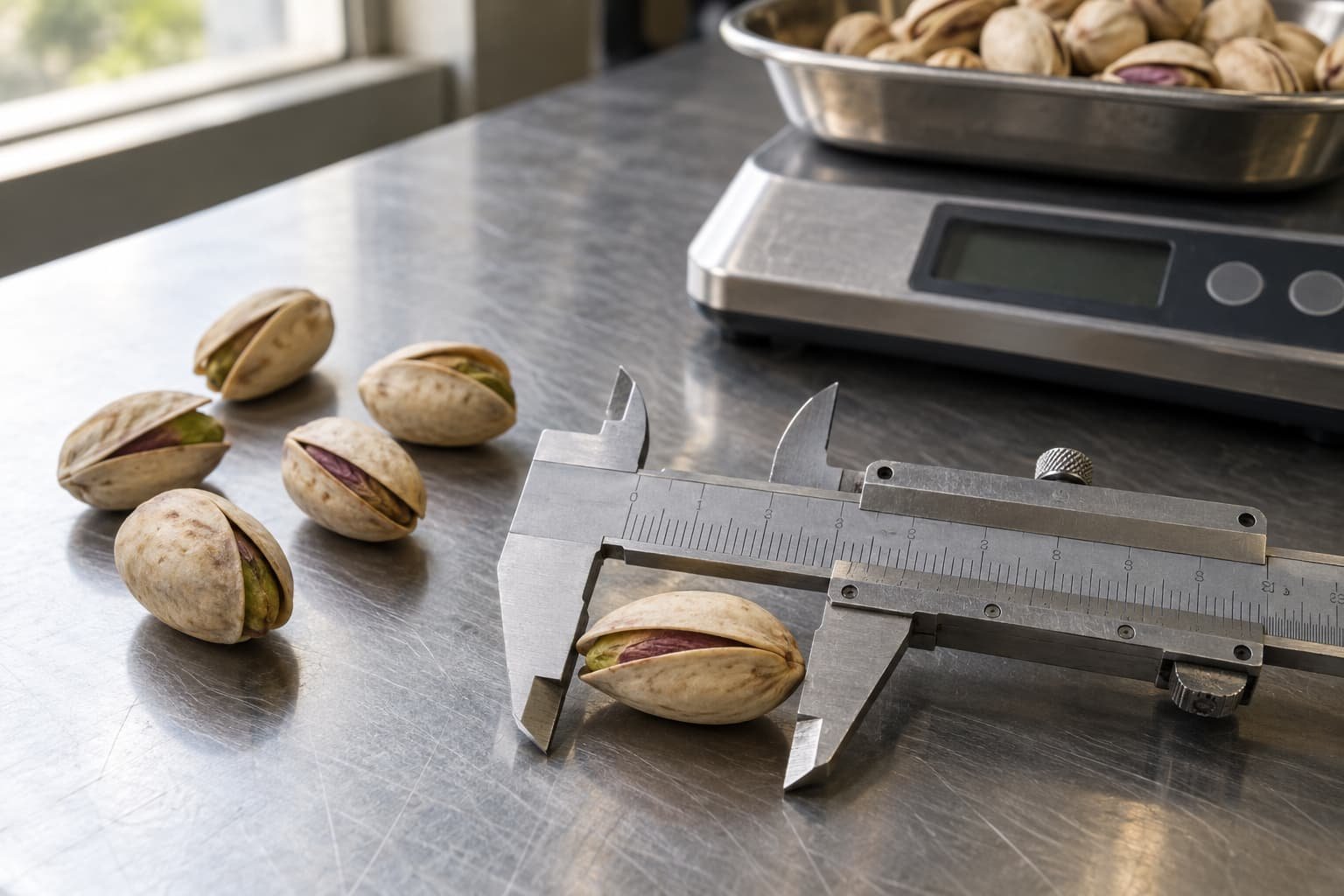
A count-per-ounce chart cannot be converted into one universal chart of shell lengths. Count describes average weight. Millimeters describe a physical dimension. The relationship between the two changes with the variety and shape of the nut.
Two products in the same count range can have different lengths and widths. A long pistachio may look more elongated while a round pistachio appears broader. Their average whole-nut weights can still be similar. If dimensions matter for your packaging or processing equipment, request a separate dimensional specification.
Can Photographs Show the Exact Pistachio Size?
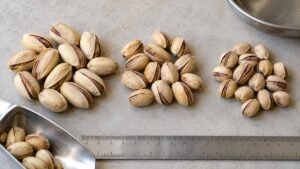
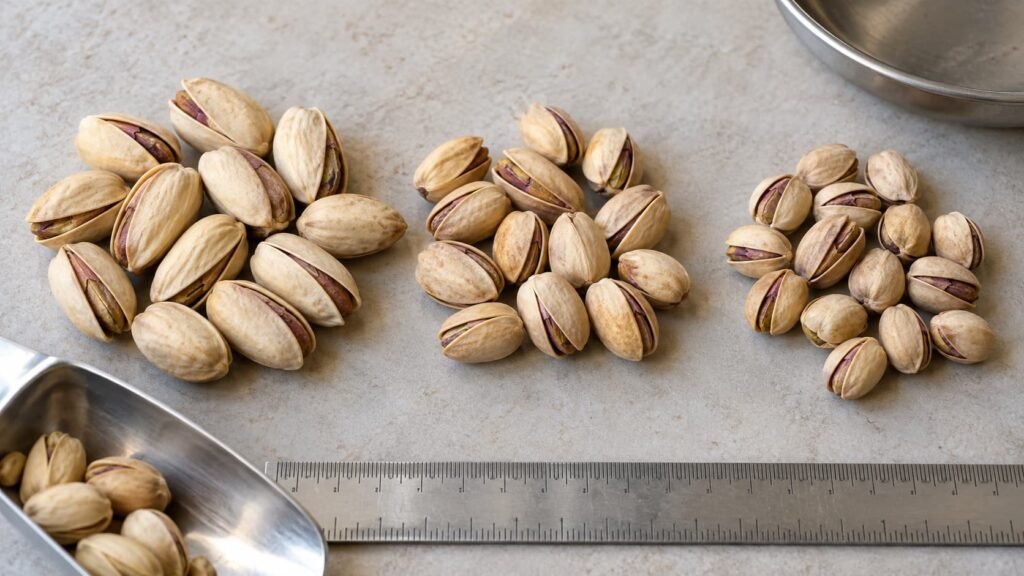
Photographs are useful for comparing shape and appearance but they need a reliable scale. A close-up image without a reference can make a small nut look large. A side-by-side photograph taken under the same conditions gives a more useful comparison.
For purchasing decisions, combine photographs with the count specification and a representative physical sample where practical. Images can help explain the product but they should not replace measurable order requirements.
Do “Jumbo” and “Extra Large” Always Mean the Same Thing?
Size names should be interpreted within the grading system or supplier specification being used. A marketing description such as “jumbo” is not enough to establish an exact count range across all origins and sellers.
Ask the supplier to state the numerical count and any applicable standard. This is particularly useful when comparing Iranian products with pistachios from another origin. The broad principles may be familiar while the commercial size ranges and naming conventions differ.
Pistachio Size vs Quality Grade
Size is one part of a pistachio specification. Quality grade considers a wider set of characteristics. A large pistachio can have an unattractive shell or an underdeveloped kernel. A smaller pistachio can be fresh and consistent with good internal condition.
Treating size as a complete quality measure can lead to expensive purchasing mistakes. A buyer may pay for a larger count grade without receiving the appearance or usable product quality expected for the intended application.
| Product characteristic | What it helps assess | What the size count alone cannot establish |
|---|---|---|
| Size count | Average whole-nut weight | Overall quality |
| Size uniformity | Consistency within the lot | Flavor and freshness |
| Shell opening | Accessibility and product classification | Internal kernel condition |
| Shell appearance | Visible presentation | Laboratory compliance |
| Kernel development | Condition of the edible portion | Full shipment conformity |
| Kernel yield | Recoverable edible weight | Suitability for every application |
Does a Larger Pistachio Contain More Usable Kernel?
A larger in-shell nut may contain a larger kernel but the size count does not tell you its exact edible yield. The shell is part of the measured weight. Shell weight and kernel development can differ between products.
For a processor, the useful calculation is often the purchase cost divided by the recoverable usable kernel weight. This requires a shelling test or other suitable yield assessment. Choosing the lowest count without checking yield can overlook a factor that matters more to production cost.
Is Pistachio Size Related to Shell Opening?
The count range does not identify the opening method. Naturally opened and mechanically opened pistachios should be described separately in the quotation. Closed-shell tolerances also need their own specification where relevant.
A complete product description therefore combines the variety and size with the opening classification. Buyers who need a specific product should confirm all three rather than expecting the size label to communicate them.
Can Size Indicate Food Safety?
No. A large and attractive pistachio is not proof of food safety compliance. Size assessment and laboratory testing answer different questions. Food safety requirements must be reviewed separately according to the product and destination.
For a wider explanation of inspection priorities, read our guide to pistachio quality control before export. It explains why visual checks should form part of a broader verification process.
How to Choose the Right Pistachio Size for Your Market
The most suitable pistachio size is the one that supports your final product at an acceptable cost. A premium snack line and a food processing operation do not necessarily benefit from the same specification. Even two importers in the same country may serve very different customers.
Start with the use of the product. Then compare samples and quotations that meet the relevant requirements. This approach is more useful than choosing a size solely because it is described as premium.
| Business application | Main purchasing priority | Role of pistachio size |
|---|---|---|
| Premium in-shell products | Presentation and consistency | Larger sizes may support the desired appearance |
| Wholesale snack distribution | Customer acceptance and cost | Compare suitable count ranges against the target selling price |
| Mixed-nut products | Balance in the finished mixture | Consider appearance and the number of nuts per serving |
| Roasting operations | Consistent processing results | Assess size uniformity and trial the selected lot |
| Shelling and kernel processing | Usable yield and internal quality | Evaluate size alongside recovery and processing losses |
| Bakery and confectionery | Kernel characteristics | Kernel form may matter more than in-shell count |
Choosing Pistachio Sizes for Premium Retail
Larger pistachios can create an appealing presentation in premium product lines. However, size should be considered together with consistent shell color and the overall appearance of the sample. A visibly mixed batch can weaken the effect that the larger size was intended to create.
Compare the candidate sizes in a realistic display or packaging format. This helps determine whether the difference is noticeable enough for your customers to value. Paying a premium for a larger size makes more sense when it contributes to the product you intend to sell.
Choosing Pistachio Sizes for Wholesale Distribution
Wholesale buyers often need to balance presentation with a competitive selling price. Comparing adjacent ranges within the same variety can help identify whether a size upgrade is commercially worthwhile.
Keep the other requirements consistent during that comparison. A price difference between two quotations cannot be attributed to size if one also has different opening characteristics or a lower quality specification. A clear comparison makes negotiation more productive and reduces the risk of selecting an unsuitable product.
Choosing Pistachio Sizes for Roasting
Size uniformity is worth discussing when the product will be roasted after import. A visibly mixed lot introduces another variable into processing. However, roasting performance also depends on the equipment and operating conditions. Size alone cannot establish the correct roasting settings.
Test the proposed product under your own process before making a large commitment where practical. The approved specification should reflect both the commercial appearance you need and the product characteristics that work in production.
Choosing Pistachios for Kernel Processing
When the shells will be removed, the purchase should be assessed around recoverable kernel value. Compare shelling yield and usable quality rather than paying for external size that offers little benefit to the final product.
It may also be useful to compare the total cost of in-shell sourcing with ready-to-use bulk pistachio kernels. Include labor and processing losses in that comparison. The better option depends on your facilities and the form of ingredient required.
How Pistachio Size Affects Wholesale Price
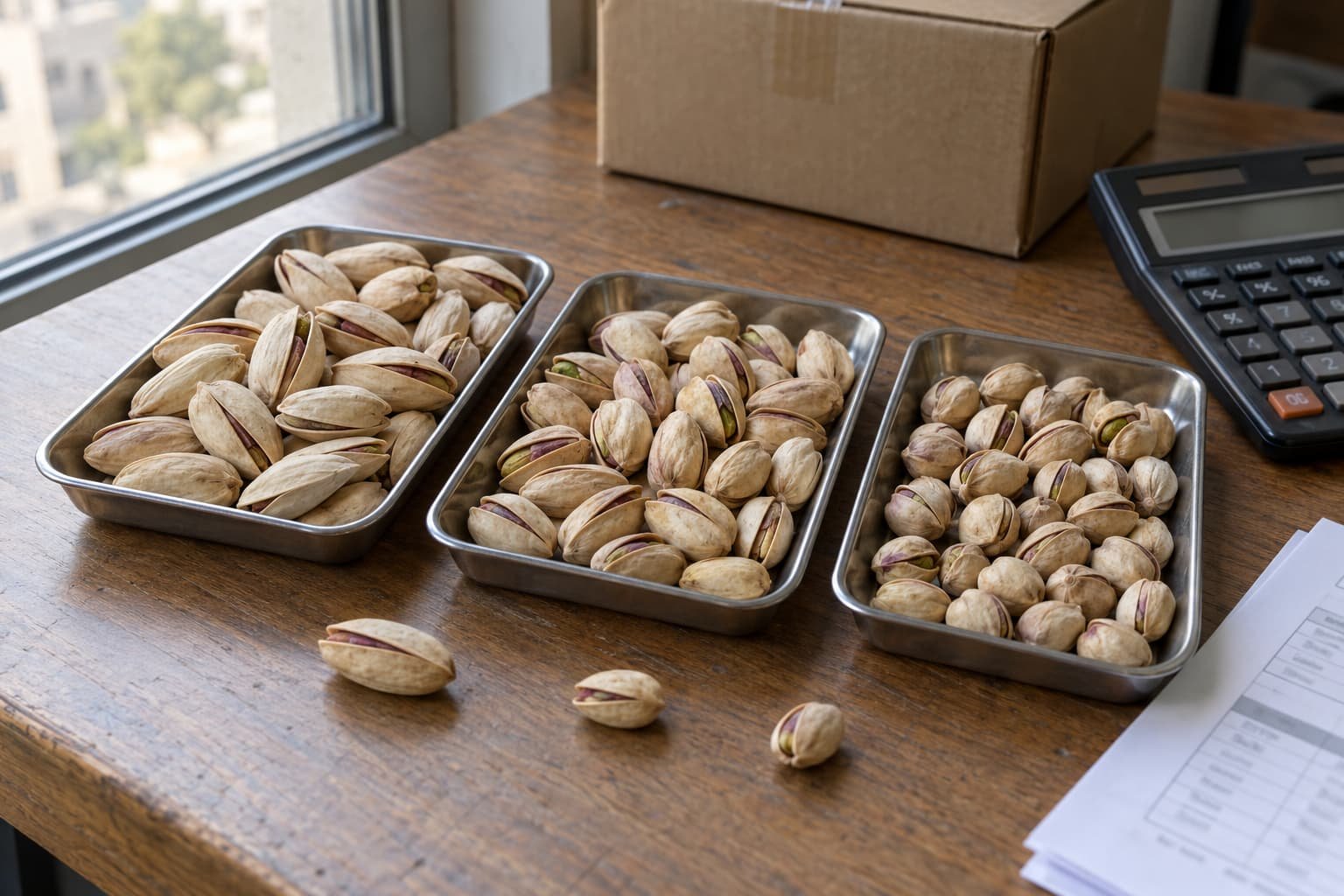
Size can influence wholesale pricing but it does not operate independently. Larger nuts may attract a premium when their appearance is valued and available supply is limited. The size of that premium changes with the product and market conditions.
A meaningful price comparison needs more than two count ranges. Variety and crop year should be considered. The opening classification and defect tolerances also matter. Packaging and delivery terms can change the amount the buyer ultimately pays.
Comparing Two Pistachio Quotations Fairly
Suppose one supplier offers 20/22 Akbari and another offers 28/30 Fandoghi. The difference in price reflects more than size because the variety also changes. These may both be valid options but they are not equivalent products You can see how suppliers list different count ranges in our in-shell pistachio price comparison.
To isolate the effect of size, request quotations for the same variety with comparable quality requirements. Keep the processing state and packaging consistent. Then compare the price against the actual samples and the requirements of your customers.
Our guide to buying Iranian pistachios in bulk covers the wider sourcing details that should accompany a wholesale quotation.
Comparing Cost per Kilogram of Usable Kernel
For a simplified illustration, imagine an in-shell batch priced at $8 per kilogram that produces 0.50 kilograms of usable kernel per kilogram purchased. The raw material cost is $16 per kilogram of usable kernel before shelling expenses. A second batch priced at $7.60 with a usable yield of 0.45 kilograms has a raw material cost of approximately $16.89 per kilogram of usable kernel.
These figures are hypothetical and do not represent current market prices or typical yields. They demonstrate why a cheaper in-shell quotation may not produce a lower ingredient cost. Actual calculations should use tested yield and the costs specific to your operation.
Do Shelled Pistachios Use the Same Size Chart?
The in-shell pistachio size chart should not be applied directly to shelled kernels. Removing the shell changes the relationship between count and weight. Kernel products may also be classified by their form and screening characteristics.
A kernel specification may distinguish whole kernels from halves or pieces. It may also include color and the proportion of broken material. Buyers should ask how the supplier defines the offered grade and what measurement method supports it.
| Product format | Useful specification details |
|---|---|
| In-shell pistachios | Count per ounce and size uniformity |
| Whole pistachio kernels | Size method and whole-kernel percentage |
| Split kernels | Proportion and characteristics of split material |
| Pistachio pieces | Defined piece size or screen range |
| Green peeled kernels | Supplier’s color classification and physical specification |
This distinction is especially relevant when comparing products for food manufacturing. A large in-shell grade does not automatically correspond to a particular kernel grade after shelling. Our in-shell vs shelled pistachios guide explains the broader differences between these purchasing formats.
Common Mistakes When Reading a Pistachio Size Chart
عکس
One common mistake is assuming that a higher number means a larger pistachio. In the count-per-ounce system, the relationship is reversed. Another is treating the count as a millimeter measurement. These misunderstandings can lead a buyer to request a product very different from the one intended.
A less obvious mistake is accepting the average count as the entire size specification. A mixed batch can produce a suitable average without having the visual consistency the buyer expects. Reviewing representative samples and agreeing on uniformity requirements helps address that gap.
Buyers can also overlook the product state used for sizing. Raw and processed products should be identified clearly. Do not assume that a count specification can be transferred unchanged between different processing states without confirming the supplier’s assessment method.
Finally, avoid using the chart as a complete purchasing decision. It tells you about average whole-nut weight. It does not establish freshness or kernel yield. Those require separate checks.
How to Specify Pistachio Size in a Wholesale Order
A written specification should make the intended product easy to identify and inspect. The size range belongs alongside the variety and processing requirements. Sampling and acceptance criteria should be agreed before the shipment is prepared.
The following table shows the information buyers should clarify. It is a specification framework rather than a universal contract or grading standard.
| Specification field | Information to agree |
|---|---|
| Product format | Whole in-shell pistachios |
| Variety | Required cultivar |
| Count range | Required nuts per ounce |
| Assessment state | Product state used for size measurement |
| Uniformity | Applicable standard or agreed criterion |
| Opening method | Naturally opened or mechanically opened |
| Quality requirements | Defined appearance and defect tolerances |
| Sampling procedure | Method for obtaining a representative shipment sample |
| Packaging | Material and net weight per unit |
| Order details | Quantity and destination |
| Delivery terms | Agreed Incoterm and named place or port |
A useful inquiry might state that the buyer requires raw Ahmad Aghaei in-shell pistachios in a 24/26 count range. It should then explain the preferred opening classification and packaging. The supplier can confirm availability and discuss the remaining specifications before preparing the final quotation.
Where samples are approved, record what the approval covers. An attractive sample should not replace measurable requirements for the shipment. It is most useful when it supports a specification that both parties understand.
Frequently Asked Questions About Pistachio Sizes
What Is the Largest Pistachio Size?
Within the ranges shown in this article, 18/20 represents the largest average in-shell nuts. It should not be treated as the largest size available from every supplier or origin. Always confirm the available count range for the particular variety and crop.
Which Is Bigger: 20/22 or 24/26 Pistachios?
20/22 pistachios are larger on average. Fewer whole nuts are needed to reach one ounce. This comparison assumes both products use the same count system and are assessed in a comparable processing state.
What Does 28/30 Mean in Pistachios?
It means approximately 28 to 30 whole in-shell pistachios per ounce. It does not refer to the number per kilogram or the shell length. The exact shipment assessment depends on the agreed sampling method and size requirements.
Are Smaller Pistachios Lower Quality?
No. Size and quality are separate characteristics. Smaller pistachios can be fresh and well sorted with good internal condition. The correct choice depends on the intended use and the complete specification.
Does Pistachio Size Include the Shell?
For the in-shell count system explained here, yes. The measured weight includes both the shell and the kernel. This is why the count cannot independently establish edible yield or be applied directly to shelled kernels.
Can the Same Pistachio Variety Have Different Sizes?
Yes. A variety can produce nuts that are sorted into different commercial size ranges. The variety name describes the cultivar while the count identifies the size specification of the offered lot.
What Is the Best Pistachio Size for Export?
There is no single best size for every export order. The appropriate range depends on the buyer’s customers and business model. It should be selected alongside quality requirements and the final purchase cost.
Should I Order by Count or by a Description Such as “Large”?
Use the numerical count and identify the applicable measurement system. A descriptive name can help explain the product but should not be the only size requirement. Clear numerical specifications make samples and quotations easier to compare.
Choose a Pistachio Size That Matches Your Business
A pistachio size chart is most useful when it helps you define a measurable order. Understand the count first. Then assess the actual product against the appearance and quality your customers require. For processing applications, include usable kernel yield in the calculation rather than relying on shell size alone.
RTFNUTS supplies Iranian in-shell pistachios for wholesale and export orders. When discussing current availability, include your preferred variety and count range with the required quantity. Your processing preferences and packaging needs should also be specified together with the destination.
These details give our team a clearer basis for reviewing suitable products and preparing an export quotation. To discuss your requirements, contact RTFNUTS and request information about available sizes and representative samples.