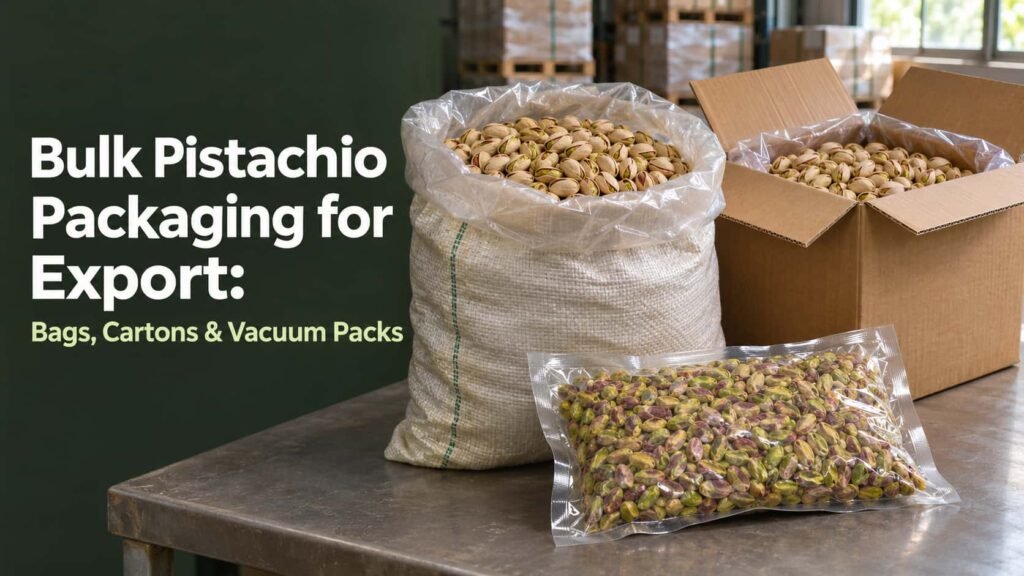
When ordering pistachios in bulk, start with the product and work outward. Decide how much pistachio your team wants to open or move at one time, then specify the inner packaging, outer bag or carton, and pallet arrangement. In-shell pistachios can be quoted in bulk bags or cartons. Pistachio kernels are commonly quoted in cartons, with the inner pack and sealing method agreed for the order.
Two suppliers can both quote a 10 kg carton while offering different packaging. One may use a single 10 kg inner bag, while the other may offer two separately sealed 5 kg bags. The total quantity is identical, but the second configuration lets a buyer open 5 kg at a time. That difference matters when a production team uses only part of a carton per shift or when an importer resells the product in smaller units.
The right bulk pistachio packaging depends on what happens between packing and final use. A repacker moving through stock quickly has different requirements from a confectionery manufacturer that opens one small pack per batch. Use the comparisons below to turn those requirements into a written specification that suppliers can quote.
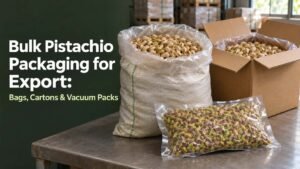
Bulk Pistachio Packaging Options at a Glance
| Packaging option | Where it fits | What to confirm in the quote |
|---|---|---|
| 25 kg or 50 kg bulk bags | In-shell pistachios destined for high-volume repacking, roasting or distribution | Bag material, liner if required, closure, net weight per bag, gross weight and pallet arrangement |
| 10 kg carton for in-shell pistachios | Stock handled or distributed by carton, or receiving operations that prefer smaller units | Inner packaging, outer dimensions, gross weight and agreed stacking arrangement |
| 5 kg or 10 kg carton for kernels | Food manufacturing, ingredient distribution and other operations that use measured quantities | Number of inner bags, net weight per inner bag, seal type and storage instructions |
| Vacuum-sealed inner bags in cartons | Kernel orders where reducing oxygen exposure before opening is important | Availability for the exact product, bag size, sealing method, outer carton and storage conditions |
At RTF Nuts, published formats for wholesale in-shell pistachios include 25 kg bags, 50 kg bags and 10 kg cartons. The common formats for bulk pistachio kernels are 5 kg and 10 kg cartons. Confirm the inner packaging, vacuum options and shipment configuration when requesting a quote for a particular grade and quantity.
How to Choose Packaging for Bulk In-Shell Pistachios
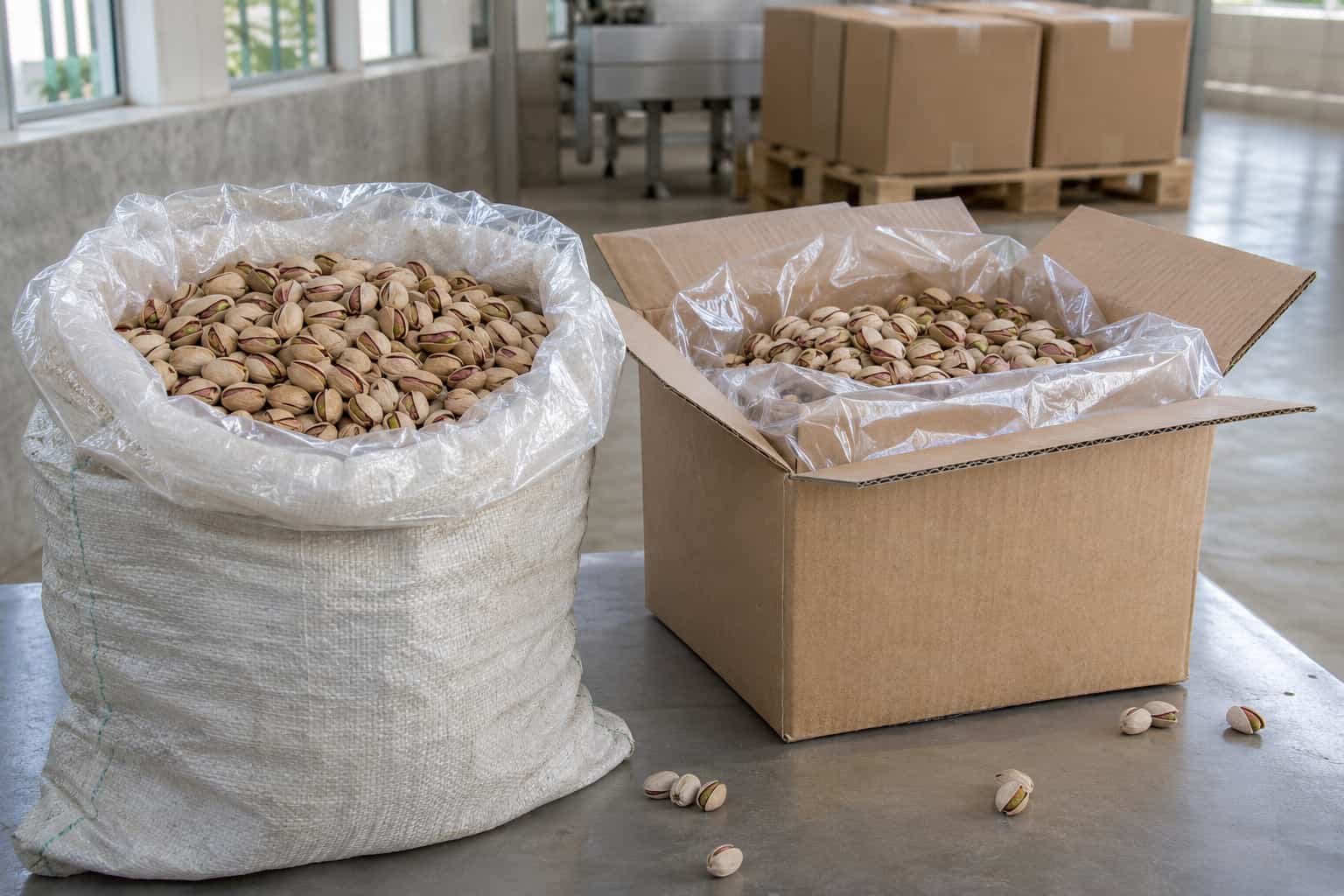
When to Choose 25 kg or 50 kg Bags
Bulk bags are worth comparing when the shipment goes to a buyer with an established process for moving and opening large units. For example, a repacking facility that empties whole bags into a production hopper may prioritize the number of units it receives and how easily those units move through its line. A distributor that sends smaller allocations to several customers may find a different format easier to manage.
Ask the supplier to describe the bag material, closure and any liner in writing. An outer woven bag and a sealed inner liner serve different functions. The bag carries the load, while the inner packaging should be selected according to the product, route and agreed storage conditions. Where an inner liner is required, specify whether you expect it to be sealed independently and ask how the outer bag will be closed.
The choice between 25 kg and 50 kg also affects receiving. Confirm what your warehouse can unload and move with its existing equipment, how the units will be presented on arrival, and whether the forwarder will handle the load as loose bags or palletized cargo. Ask for both configurations when the price difference is small enough that warehouse handling could change the decision.
When to Choose Cartons for In-Shell Pistachios
Cartons can be practical when the receiving operation counts, stores and distributes stock by case. A regional distributor may receive a single bulk shipment and allocate individual cartons to customers over several weeks. A buyer that moves the entire lot straight into repacking may put more emphasis on how quickly bags can be emptied.
Specify what goes inside the carton. An inquiry for 10 kg cartons should cover the inner liner or bag, closure method and whether each carton will be marked individually. If your destination warehouse uses fixed rack dimensions, ask for the carton’s outside measurements and the finished pallet dimensions. A small difference in carton width or loaded pallet height can affect how the shipment fits your storage area.
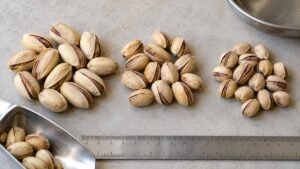
The commercial grade belongs in the same specification. If your buyer requires a particular size range, specify it alongside the packaging. RTF Nuts’ pistachio size chart explains how counts are used when selecting in-shell grades.
How to Choose Packaging for Bulk Pistachio Kernels
Choose Inner-Pack Size Around Production
Start with the amount your team uses after opening a bag. If a production run typically uses 5 kg of kernels, a sealed 5 kg unit can match that run. The supplier may quote a 5 kg carton or, if available, two separately sealed 5 kg inner bags in a 10 kg carton. If a run uses the full 10 kg, one larger inner bag may be convenient to unload and open.
Consider how the kernels will appear in the finished product. A buyer using whole kernels as visible toppings may care about breakage during handling. A manufacturer grinding kernels into paste may put greater weight on how efficiently the team can open and use each unit. In either case, record the agreed product grade separately from the packaging so the purchase order describes both the ingredient and how it should arrive.
Include the intended use in the inquiry. A supplier reviewing an order for visible toppings should see that information alongside the required grade and preferred packaging. For a gelato or ice cream application, RTF Nuts’ guide to choosing pistachio kernels for ice cream can help define the ingredient specification before you settle on pack sizes.
When to Request Vacuum-Packed Pistachio Kernels
Vacuum sealing reduces the amount of air inside a sealed pack. It is worth discussing when you want to limit the kernels’ exposure to oxygen before opening or when your warehouse will release batches gradually. The vacuum bag still needs suitable outer protection, and the packed product should be stored according to the conditions confirmed by the supplier.
Treat vacuum packing as a complete specification. State how many sealed inner bags should go into each outer carton and how much product each one should contain. Ask whether the supplier can show a sample of the proposed packaging or provide photos of the seals, carton arrangement and label placement. If you need independent lot identification on each inner bag, make that request before artwork or packing begins.
Also ask what the supplier expects you to inspect on arrival. A buyer who notices a loose pack, puncture or damaged seal should set aside the affected unit and follow the agreed quality review process. Record the lot code and photograph the condition. Plan how your team will store and use the product once the pack has been opened.
Match the Packaging to the Route and Warehouse
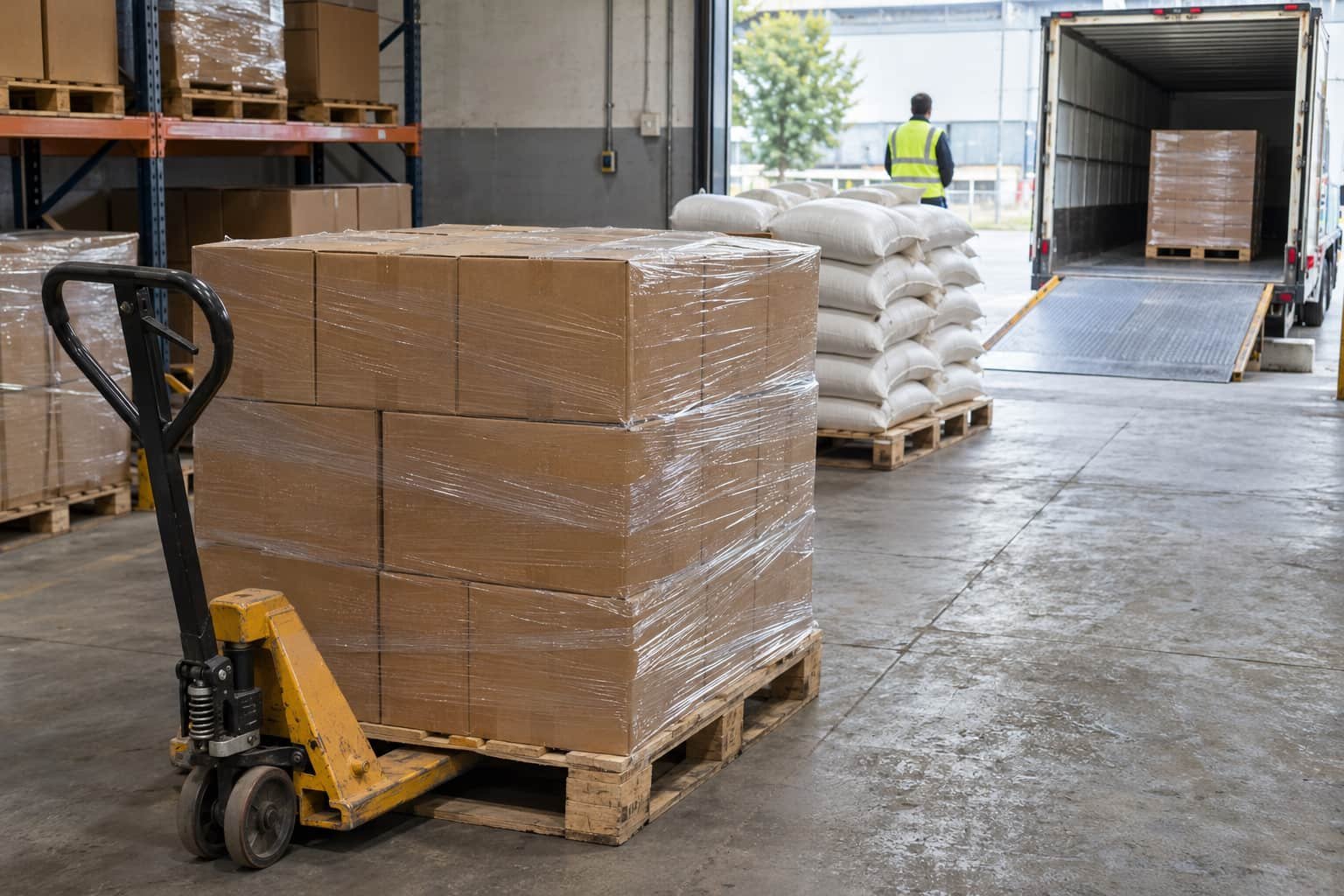
Road Freight and Ocean Freight
For a road shipment that moves directly to the buyer’s warehouse, ask how the order will be loaded and unloaded, and whether it will change vehicles or pass through a consolidation hub. For ocean freight, also consider the length of the journey, possible terminal storage and exposure to changing temperatures. The shipping plan should cover the whole route from the point of packing to the named delivery location.
Condensation is a cargo consideration when conditions change during a journey. Discuss the route with your supplier and forwarder, including the condition of the cargo unit before loading and any moisture-control measures appropriate for the shipment. The IMO, ILO and UNECE cargo packing code provides general guidance on packing and securing cargo transport units.
Economics can also change with the transport plan. If the forwarder charges by a combination of dimensions and weight, ask for the dimensions and gross weight of the finished loading units. A carton dimension multiplied by carton count helps estimate volume, while a forwarder building a palletized quote needs the actual loaded pallet footprint and height.
Palletized or Loose-Loaded Pistachios
Palletized cargo can suit warehouses equipped to receive and move complete pallets. A loose-loaded shipment may be workable when the receiving team has the staffing, space and time to handle individual bags or cartons. Ask your warehouse and forwarder to assess both approaches using the actual unit weights, dimensions and delivery conditions.
For palletized loads, confirm the pallet footprint, loaded height, units per layer, layers per pallet and total number of pallets. Ask whether there will be any part pallets and how they will be marked. If the destination or consignee has specific requirements for the pallet material or markings, include those in the written order.
For loose-loaded cargo, confirm whether loose loading is accepted at the receiving site, who is responsible for unloading, and how the cargo will be secured and accessed safely. Share the agreed loading plan with the receiving team so they can schedule labor, equipment and storage space before arrival.
How to Calculate Package Count and Gross Cargo Weight
Worked Example for a 5,000 kg In-Shell Order
Assume you want 5,000 kg net of in-shell pistachios. Package count is total net product weight divided by the net product weight per unit. For this example, each option divides evenly.
| Pack format | Net weight per unit | Number of units | What changes for the buyer |
|---|---|---|---|
| 50 kg bulk bag | 50 kg | 100 bags | Fewer units arrive, with more product to handle per bag |
| 25 kg bulk bag | 25 kg | 200 bags | Product can be issued or moved in smaller increments than a 50 kg unit |
| 10 kg carton | 10 kg | 500 cartons | More units to count, with smaller quantities for issue or distribution |
These figures describe the order at the product’s net weight. To estimate gross cargo weight, add the weight of packaging, pallets and any other packing materials included in the cargo. Ask your supplier for measured or confirmed values before using them for freight planning.
For instance, suppose a packed 10 kg carton weighs 10.6 kg gross, including both the carton and its inner packaging. Five hundred cartons would weigh 5,300 kg gross before pallet weight and additional pallet materials. If the supplier quoted a loose-loaded configuration first and later switched to pallets, ask for the revised gross weight and dimensions before comparing the freight offers.
A fixed number of cartons per shipping container can be quoted only after the supplier and forwarder have the carton or pallet measurements and can evaluate the loading arrangement. The agreed equipment, usable space, load distribution and applicable weight limits all matter. Request a loading plan for your shipment if container capacity is important to the order.
Compare Both Quotes on the Same Basis
Start with the same grade, processing specification, net quantity, delivery term and named place when asking for a quote in two pack formats. Then compare the quoted product cost, packing surcharge if any, freight, handling on arrival and repacking costs you expect to pay separately.
A cheaper carton or bag price can be offset by receiving labor, split-pack work or a higher freight charge. Ask what is already included in each quote so you can use the same cost categories for both options. The Iranian pistachio wholesale price guide explains how to compare prices per kilogram and delivery terms.
What to Specify for Packaging, Labels and Traceability
Record the configuration at three levels. The inner packaging covers the material in contact with the pistachios and how it is closed. The outer packaging covers the carton or bag, its dimensions and its markings. The shipping unit covers how those cartons or bags are loaded, whether individually or on pallets.
| Specification | What to write or ask for |
|---|---|
| Product description | In-shell pistachios or kernels, variety or grade if required, and processing state |
| Net quantity | Total product weight and net weight per bag, carton and inner pack where applicable |
| Inner packaging | Material or agreed specification, number of inner bags, and sealing method |
| Outer packaging | Bag or carton type, closure, outside dimensions and gross weight per unit |
| Unit labeling | Agreed product name, lot code, net weight and any destination or consignee fields |
| Pallet or loading plan | Loose or palletized, units per pallet, pallet count, dimensions and gross weights |
| Storage and receiving | Storage instructions, expected pack condition and the process for reporting issues |
| Supporting information | Packing list and, where needed, food-contact packaging documentation or a label proof |
Ask for a label proof before packing if the importer, distributor or end customer has specific requirements. Common fields to discuss include product description, lot code, net weight, origin, storage instructions and any relevant dates. The exact label content depends on the destination and sales channel, so have your importer or broker confirm the applicable requirements for the order.
If a shipment contains more than one lot, ask the supplier to explain how the lots will be separated or identified on the packing list. A warehouse should be able to connect the carton or bag it receives with the relevant shipment record. If your team opens cartons and stores the inner bags separately, request lot identification on the inner units as well.
What to Check Before Dispatch and on Arrival
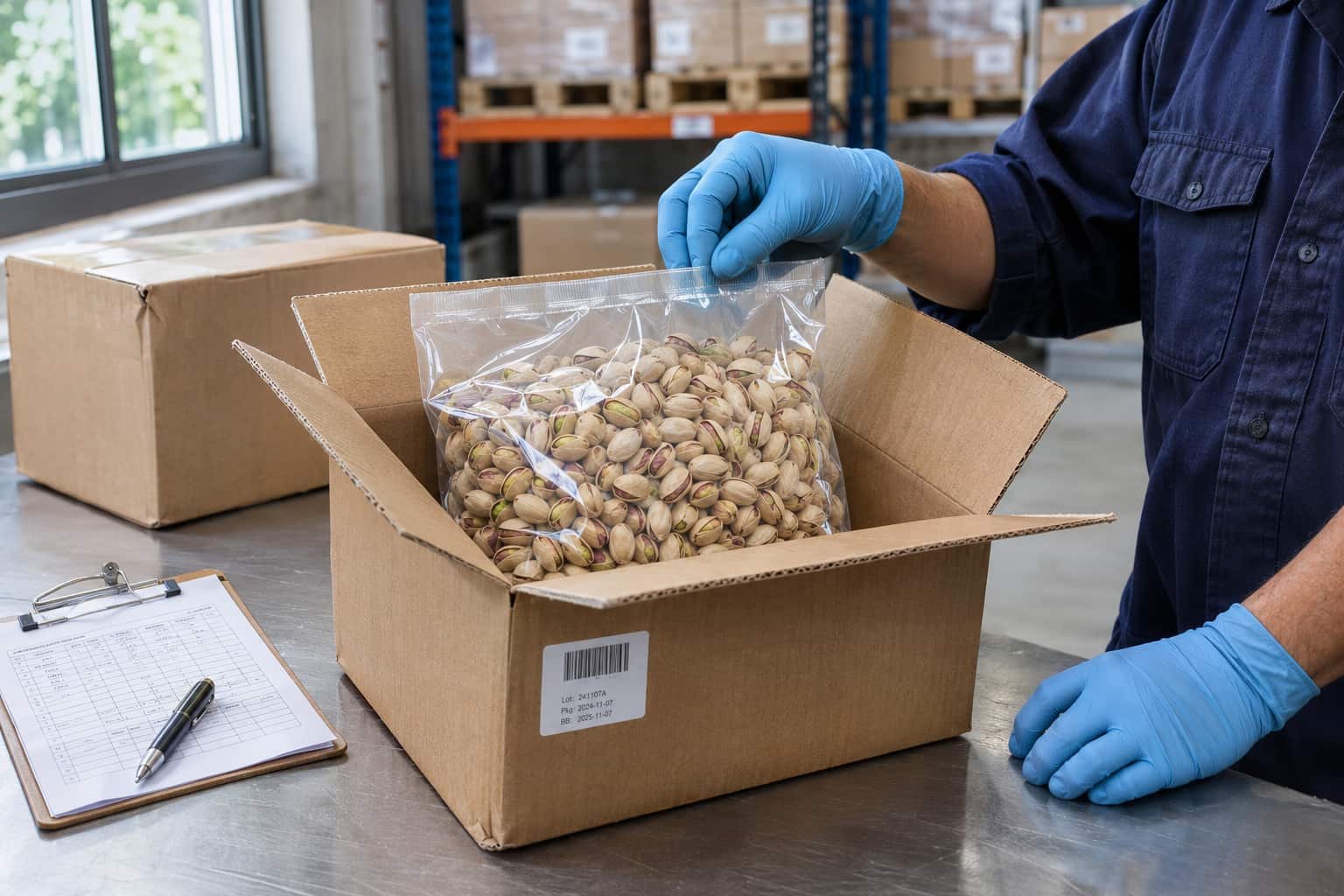
Agree on the Packaging Before the Shipment Is Packed
Ask for a photo or physical sample if you are buying a new packaging configuration. For the first order, an approved image showing the inner pack, closure, outer label and finished pallet can make the written specification easier for both teams to apply. Record which parts of the sample are agreed, such as net fill, bag count, sealing method and label position.
Before dispatch, compare the packing list with the order. Check the number of bags or cartons, total net weight, recorded gross weight and pallet count. Review any agreed exception, such as a partial pallet or two clearly identified lots in the same shipment. For product inspection and testing, use the pistachio quality control guide when defining the checks you want completed before shipment.
Give the Receiving Team the Same Specification
Provide your warehouse with the final packing list and expected loading arrangement before the shipment arrives. On receipt, compare the pallet and package count, look for crushed cartons, torn bags, visible moisture or damaged seals, and capture photos of any affected units. If selected units need further review, keep their lot details attached and follow the agreed quality procedure before release.
Packaging approval and product testing are separate checks. A well-sealed pack helps preserve the agreed packing condition. Product safety and compliance depend on the relevant checks for the lot and destination. For a shipment that requires aflatoxin testing, confirm the documentation and how it will be linked to the lot. RTF Nuts’ aflatoxin guide for pistachio importers covers that topic in more detail.
How to Request a Quote for Pistachios in Bulk Packaging
Give the supplier enough information to quote a pack that your business can actually receive and use. Include the product, grade if known, total net weight, destination and target pack size. If you are deciding between two choices, ask for separate quotes using the same delivery basis. Request confirmation of any item where you have a firm specification, such as two separately sealed inner bags or a maximum loaded pallet height.
Example Quote Request for Pistachio Kernels
Please quote 5,000 kg net of raw pistachio kernels for delivery to [destination]. We plan to use 5 kg per production run. Our preferred configuration is a 10 kg net outer carton with two separately sealed 5 kg inner bags. Please confirm whether vacuum sealing is available for both inner bags.
Include the gross weight and outside dimensions of a packed carton, cartons per pallet, finished pallet dimensions, lot marking on inner bags and cartons, and storage instructions. Please quote 5 kg cartons separately if available, using the same delivery term and named place.
Example Quote Request for In-Shell Pistachios
Please quote 5,000 kg net of in-shell pistachios in [variety, size grade and processing state]. The shipment is for commercial repacking at [destination]. Please quote 25 kg bulk bags and 10 kg cartons as separate options. Confirm the bag or carton material, the inner liner and closure, the number of packages, and the gross cargo weight and dimensions for each option.
Our warehouse prefers palletized delivery. Please show the pallet configuration and identify any difference in charges between the two packaging formats.
Use the supplier’s reply to complete the purchase specification. If a preferred format is unavailable, ask for the closest configuration and how it changes the number of packs, the amount exposed after opening and the receiving work. That gives your buying and warehouse teams enough information to approve the same order.
Frequently Asked Questions About Bulk Pistachio Packaging
What is the best packaging for bulk in-shell pistachios?
For high-volume repacking, compare 25 kg and 50 kg bags against your unloading and opening process. For case-based distribution or smaller stock releases, 10 kg cartons may be easier to allocate. Ask for the inner packaging, gross unit weights and loading arrangement so you can compare both formats for the actual route and warehouse.
What is the difference between a lined carton and a vacuum-packed carton?
A lined carton has an inner barrier between the pistachios and the outer carton. In a vacuum-packed configuration, the product is sealed inside an inner bag after air is removed. Ask for the inner bag count, weight per bag and sealing specification whenever those details matter to your order.
Can I request two 5 kg bags in a 10 kg carton?
You can specify that configuration in your inquiry. Availability depends on the supplier, product and order. If you need to open only 5 kg at a time, request two independently sealed 5 kg bags and ask the supplier to confirm them in writing. A 5 kg carton is another format to compare when available.
How much pistachio can fit in a shipping container?
The answer depends on the pack dimensions, unit weight, loading arrangement, equipment and applicable limits. Ask the supplier or forwarder for a shipment-specific plan showing the estimated package count, pallet count if applicable, net product weight and gross cargo weight. Use those details to compare freight offers.
Does vacuum packing determine the shelf life of pistachio kernels?
Shelf life should be confirmed for the exact product, packaging and storage conditions. Ask the supplier for the applicable storage instructions and shelf-life information, and clarify whether the period applies to unopened packs. Your team should also know how to handle kernels after a pack has been opened.
Can export cartons carry a custom label?
Custom label availability and requirements depend on the supplier and order. Share a label draft early, including the required language, product name and lot information. Ask the supplier to confirm where the label will appear and whether the same information can be placed on the inner packs if your warehouse needs it.
Request a Quote for Your Bulk Pistachio Order
To receive a quote from RTF Nuts, share the pistachio type, preferred grade, total quantity and destination. If you have a packaging requirement, include the net weight per unit, inner pack size and preferred loading arrangement. Our team can review availability and confirm which configurations can be offered for your shipment.